

























































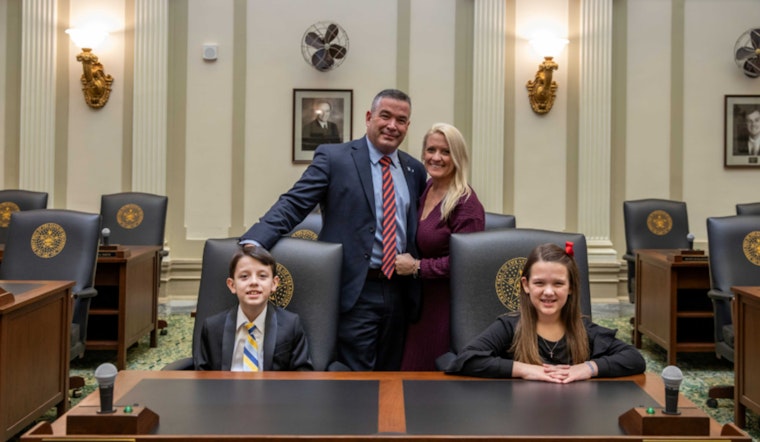
In a move aimed at setting a uniform standard for the selection of school library materials, Oklahoma Representative Chris Banning introduced House Bill 2978. As reported on the Oklahoma House of Representatives website, this bill would bar the acquisition of content in public school libraries that falls under the state's legal definition of obscenity.
Outlining his reasoning, Banning declared HB2978 would help preserve "the innocence of our youth." Laid out in Title 21 of the Oklahoma Statutes, the existing legal benchmarks for obscenity would become the guiding force for school districts in selecting library materials—this in an effort to avoid the nebulousness of "subjective community standards," as stated by the Oklahoma House of Representatives. The proposed legislation, Banning argues, seeks to provide clear direction, aiming to abate conflicts within school communities.
The proposed framework would excise current references to variable community measures, instead favoring the hard lines drawn by statute, thus applying a singular, unvarying rule statewide which, Banning asserts, would lead to less confusion. "This legislation provides a straightforward statewide rule that helps ensure school libraries stay within the definition of education," Banning told the Oklahoma House of Representatives, drawing upon the definition of education—"providing proper moral, intellectual and physical instruction" as per Black’s Law Dictionary—to buttress his argument.
With this bill, Banning is positioning himself as a safeguard, aiming to make library content decisions less conflict-prone. Despite the intent for clarity, such measures often beckon heated debate, poised between the needs of educational thoroughness and protection of student exposure. The bill is yet to pass through the legislative process, leaving its impact, and that of Indiana’s own youth, hinging on the outcomes of political debate and public opinion.





