

























































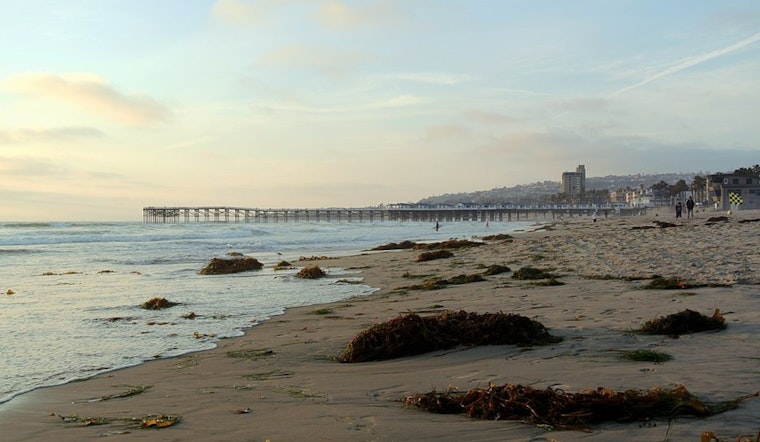
The sandstone bluffs along Pacific Beach just north of Crystal Pier are literally slipping away, residents say, leaving fresh scars on the cliff face and taped-off stretches of the Ocean Front Walk. Longtime neighbors warn the failures can be sudden, with undercut bases and waterlogged upper layers giving way without notice, and they say routine warning signs are not doing much to keep people out of danger. Scientists and local officials say a volatile mix of powerful storm waves, rising groundwater and human disturbance is speeding up the erosion.
Residents Call For A Cliff Task Force
“I have first-hand knowledge, having watched coastal erosion for almost the past 40 years,” Cheri Tabb told the Times of San Diego, calling for a dedicated task force to inspect the cliffs, remove people from restricted areas and fill man-made caves. Tabb said tape and unattended signs are not an adequate solution and recalled a collapse more than 20 years ago when soil gave way and a boulder crashed down. Pacific Beach Town Council president Charlie Nieto warned that the bluffs are an ongoing issue that, without intervention, could threaten staircases, pedestrian paths and nearby homes.
What The Science Says
Three years of weekly cliff surveys by researchers at Scripps Institution of Oceanography showed that wave strikes primarily carve away the bases of the cliffs, while heavy rainfall and elevated groundwater weaken the upper sections, allowing larger landslides to occur, according to Scripps Institution of Oceanography. Lead author Adam Young said the dataset finally allowed scientists to tease apart the influence of waves and rain and to sharpen short-term forecasts. The result is a clearer picture of why narrow beaches and human-caused disturbance can amplify the risk of collapse.
Scale Of The Risk
That local snapshot fits into a much larger pattern. In a past Scripps writeup, Professor Doug Inman warned that “studies show that 86 percent of California’s coast is actively eroding,” and climatologists project sea-level rise that will make the trend worse, according to Scripps Institution of Oceanography. The combination of stronger storm waves, higher seas and human activity puts coastal infrastructure, from staircases to wastewater plants, at long-term risk. For neighborhoods perched above the cliffs, residents and experts say sturdier monitoring and enforcement are needed to avoid sudden collapses.
City Response And Monitoring
The city says it will continue to keep an eye on shoreline structures after Crystal Pier was fully reopened last July following emergency stabilization work, and staff have flagged coastal resilience projects for future engineering, as reported by the Times of San Diego. The San Diego City Council last year approved a Coastal Resiliency Master Plan that identifies pilot projects from La Jolla through Pacific Beach to tackle flooding and erosion, according to NBC 7 San Diego. Local advocates say those plans need clearer enforcement rules and a funded operational team whose job is to keep people off unstable cliff edges.
What’s Next For Pacific Beach
Residents say they want scheduled inspections, quick fixes to man-made cavities and clear enforcement that discourages camping, fires and other activities that undermine bluff stability. Without a coordinated monitoring and maintenance program, community leaders warn the bluffs will keep retreating with each storm cycle. In the meantime, people are urged to stay behind taped-off areas and to report any fresh slumping to city authorities.



