

























































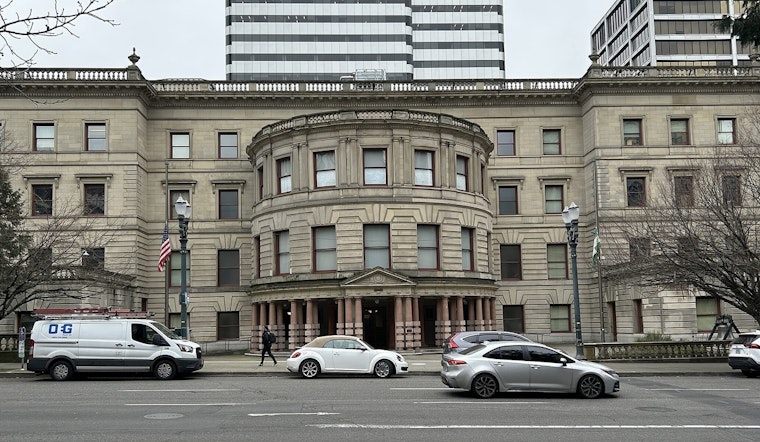
Portland’s Community and Public Safety Committee is moving to give the city more muscle against so-called “problem properties,” advancing an ordinance that would broaden the chronic nuisance code to explicitly cover human trafficking and gun violence and make it easier to flag locations that repeatedly draw police.
The proposal would extend the window for documenting issues from 30 to 90 days, cut the required number of documented incidents from three to two, and transfer final sign-off from the police chief to the city administrator.
What the ordinance would change
The draft amendment updates Chapter 14B.60 and expands the list of “Nuisance Activities” to include trafficking- and firearm-related offenses. City staff argue the current definition “is too narrow” and say the code has not had a substantive overhaul since 1997, an era when Portland’s crime patterns looked very different.
The impact statement says the longer timeline is meant to reflect how chronic problems surface over weeks or months rather than in a tight 30-day burst. Shifting sign-off to the city administrator is framed as a way to ease workload and staffing strain at the Portland Police Bureau, according to Portland.gov.
Who pushed it and why
District 3 Councilor Steve Novick is the sponsor of the ordinance. City records say the work started in 2024 through the City Attorney’s office with input from the Portland Police Bureau.
Local reporting notes that the Multnomah County District Attorney’s office specifically asked for stronger tools to go after human trafficking at motels and businesses along NE 82nd Avenue, a request that helped shape the proposal now in front of council committees, as first detailed by KATU.
How would enforcement and legal process shift
Under the existing code, neighbors or city officials must document three separate nuisance activities within 30 days, then secure sign-off from the chief of police or a precinct commander before the city can formally label a property as a chronic nuisance.
The amendment lowers the bar to two documented incidents over a 90-day span and hands sign-off authority to the City Administrator or a designee. According to Portland.gov, that designee could sit inside the Portland Police Bureau or in another city office, depending on workload.
The ordinance also adds clearer direction on Abatement Measures and revises sections on Commencement of Actions, Remedies and Burden of Proof. The goal, city staff say, is to give courts a more detailed roadmap when they order fixes, so judges, property owners and neighbors are on the same page about what compliance actually looks like.
Why 82nd Avenue is central
Both the impact statement and local coverage call out NE 82nd Avenue as a flashpoint, describing a corridor where motels and small businesses have been repeatedly connected to trafficking and violent incidents.
The Multnomah County District Attorney’s office has pushed for better leverage against owners who are accused of looking the other way or, in some cases, being complicit. Supporters argue the ordinance is meant to create an earlier, more administrative on-ramp for abatement plans so problems can be addressed before they spiral.
Critics worry the tool could fall hardest on small-property owners in working-class neighborhoods who may already be stretched thin, a concern raised in local coverage of the committee hearing and the DA’s role in shaping the measure, reported by KATU.
Next steps
The Community and Public Safety Committee discussed the ordinance on Tuesday and can now decide whether to send it to the full City Council for formal hearings and a vote.
If it advances, the measure will move through the council’s normal process, which includes more public testimony and potential amendments. City staff describe the overhaul as an effort to strengthen early intervention and spell out clearer expectations for property owners and courts, rather than to launch a sudden citywide crackdown.





.jpg)