

























































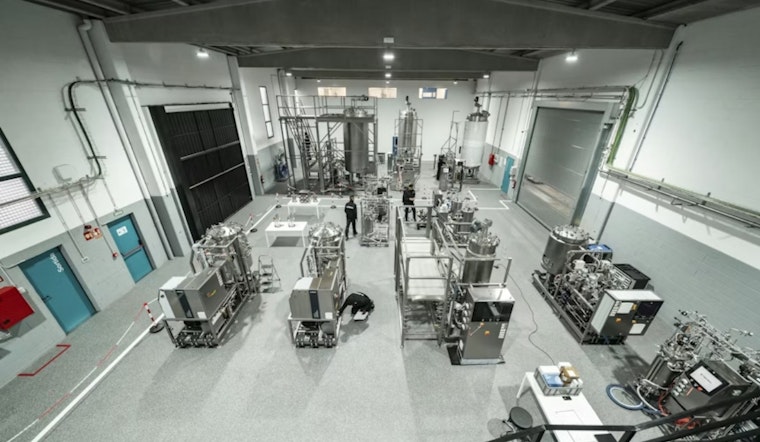
In East County, the crew behind the Advanced Water Purification program is getting ready to flip the script on what goes in the trash and what powers your tap. The East County Advanced Water Purification Joint Powers Authority is moving ahead with a biopower facility in Santee that will turn organic waste into renewable electricity to help run its new water plant.
The on-site facility will use anaerobic digestion and combined heat and power equipment to convert sludge and other organic material into electricity. The goal is to cover a significant share of the AWP project’s power needs and bring long-term operating costs down for local ratepayers. Construction is expected to begin in early 2026, with the energy plant timed to plug into the broader AWP rollout.
In a press release via Business Wire, Anaergia Technologies LLC was named the design-build contractor for the system. The C$43.8 million agreement (roughly US$32 million) has Anaergia on the hook to design, construct, commission and start up a turnkey renewable power generation facility that converts on-site organic material into biogas and electricity using anaerobic digestion paired with combined heat and power.
“This project will serve our ratepayers by reducing our operating costs and enhancing energy resiliency of critical high-quality water infrastructure confronted with rising power costs,” Kyle Swanson, CEO/General Manager of Padre Dam, said in the release.
How the Energy System Will Work
Anaergia’s project materials describe an integrated setup that conditions biogas, runs it through combined heat and power engines and can accept locally sourced organics as feedstock, according to Anaergia. The company says the installed equipment could produce about 3.1 megawatts of electricity and heat, with potential expansion to 4.6 MW, figures that are larger than some local estimates.
By tying the energy recovery equipment to the AWP’s solids-handling stream, the plant will be able to reuse its own byproducts to make power. That setup is also expected to provide a local outlet for required organic-waste diversion, giving material that would otherwise be hauled away a second life as energy.
Jobs, Timeline and Price Tag
Local reporting by the San Diego Business Journal put the design-build award at about $31.9 million and noted that construction of the renewable power facility is scheduled to start in early 2026. Anaergia and the JPA say construction should wrap up in roughly two years, lining up commissioning with the broader AWP schedule, according to Anaergia.
The San Diego Business Journal also reported that the finished biopower plant would employ about 40 people. More broadly, the overall AWP program has supported roughly 2,500 construction positions, according to ACWA.
What It Means for Local Water and Rates
The renewable power project slots into the larger East County AWP program, which is designed to produce up to 11.5 million gallons per day of purified water for customers of Padre Dam, Helix, Lakeside and the northern Otay service area, according to the program’s website. That new supply is intended to cut reliance on imported water and reduce ocean discharge of treated wastewater, while on-site energy generation is billed as a way to help stabilize operating costs and rates for local residents.
The JPA continues to post permitting and construction updates, and state environmental documents are available through CEQAnet and the JPA’s project site. Anaergia first joined the program in 2023, and the latest agreement expands that role as part of a multi-hundred-million-dollar effort estimated at roughly $950 million that project leaders say will bring purified water online by late 2026.




