

























































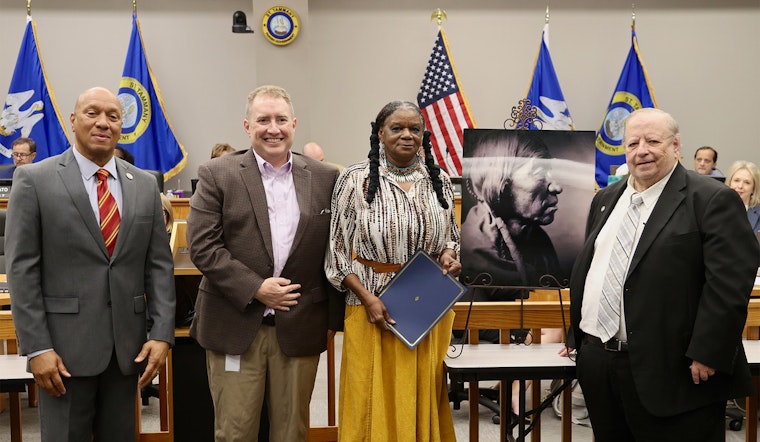
In a recent social media post, St. Tammany Parish shared that Councilmen Arthur Laughlin, Jimmy Strickland, and Jerry Binder recognized a significant date in their local history by presenting a proclamation to Chief Elwin Warhorse Gillum of the Chahta. This proclamation names Thursday, January 8, as "Chief Pierre Juzan Day," and celebrates the historic heroism of Chief Pierre Juzan of Bonfouca for his leadership during the Battle of New Orleans.
The narrative of Bonfouca, cited as the oldest documented area in St. Tammany Parish, intertwines with the legacy of the Chahta, the indigenous people who first shaped the mounds, waterways, and villages later encountered by European explorers and American settlers. It was during a pivotal moment in American history, as Major General Andrew Jackson sought the support of the Chatahatchee for the defense of West Florida, that Chief Pierre Juzan emerged as a captain in the Army. Juzan's command of a company of Chahta warriors led to critical victories at the Battle of Villere Plantation & the Battle of Chalmette Plantation, which significantly impacted the outcome of the Battle of New Orleans. According to St. Tammany Parish's post, their valor laid a foundation for a lasting relationship between the Chahta and the American military efforts.
Notably, the Chahta have stood with the United States in every subsequent war, with their veterans' final resting places amongst the historic mounds and cemeteries within St. Tammany Parish. Chief Pierre Juzan is interred in Bonfouca, a testament to his abiding connection to the land and people he served. Today, seven generations removed, Chief Elwin Warhorse Gillum continues the lineage, leading the Chahta of Bonfouca as the hereditary chief, steadfast on the land perpetually owned by Juzan's descendants and maintained by his family.
The recognition of "Chief Pierre Juzan Day" is more than a local commemoration; it is an acknowledgment of a complex past where alliances were formed amidst conflict, and a heritage of leadership paved the way for enduring partnerships. Holding this in the same regard as the Chahta's historic and current contributions to American military campaigns, the proclamation stands as both a reflection of the past and a commitment to remembering the native narratives that have long been intertwined with the nation's history, according to St. Tammany Parish's post.




