

























































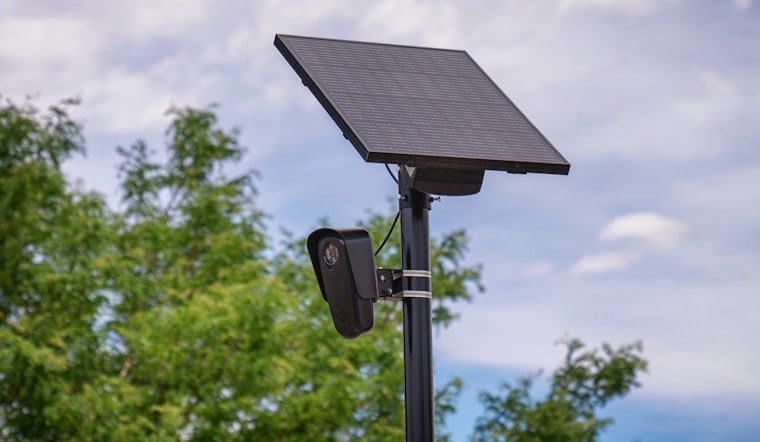
Kenner Police say a state-funded network of more than 70 Flock Safety license plate readers has helped solve over 100 cases so far in 2026, including hit-and-runs, protective order violations and stolen-vehicle cases. But the same cameras that officers credit with cracking a first-degree murder within months of installation are drawing sharp questions from privacy advocates who say the system quietly tracks the movements of every driver who passes by.
Kenner Police installed more than 50 Flock cameras in 2023, replacing an older network of about a dozen electricity-dependent license plate readers that officers say were often out of service, according to WDSU. The department switched to Flock in part because the cameras are solar-powered and maintained by the company itself, rather than the city. Kenner's Flock subscription, which the station reports costs about $250,000 annually and includes equipment and maintenance, is funded by the state.
The upgrade followed the department's earlier expansion of automated license plate reader technology, when it purchased 55 Flock units in 2022, bringing its total camera network to 93 across Jefferson Parish, according to the Atlas of Surveillance. Kenner is not new to using the cameras for investigative work; Hoodline previously reported on an Esplanade Mall copper theft arrest in which officers used Flock cameras to track a suspect's truck.
What the Cameras Can and Cannot Do
Per the station's reporting, Kenner officers can use the system to search vehicle descriptions, bumper stickers and other unique vehicle features, and to pull up pictures of cars tied to a specific case. The cameras also alert officers when a vehicle listed in the National Crime Information Center database is photographed in Kenner, and the broader Flock system can search vehicle records across the region and country. Flock's own website states that the cameras do not identify people and that its video cameras, while able to detect human presence, do not detect personal characteristics.
Flock says its technology is used in more than 12,000 communities across the United States, per the company's website as cited by the station. Kenner Police told the outlet the network has already paid off: officers solved a first-degree murder within three or four months of installing the cameras in 2023, and in one case highlighted in a Facebook post, Kenner Police arrested a man driving a stolen car. The department did not respond, and Flock also did not respond, to the station's request for comment beyond what officials already provided.
A Regional Pattern of Rapid Adoption
Kenner's expansion mirrors a broader trend across southeast Louisiana. In Baton Rouge, police reported in August that their own Flock network has helped recover an average of over $2.5 million in stolen vehicles and property while aiding homicide investigations, according to WBRZ. Even private institutions have joined in — campus police at Tulane University in New Orleans deployed Flock cameras at entry and exit points, drawing privacy and data security concerns from students, as reported by The Tulane Hullabaloo.
Not every department has stuck with the technology. WDSU noted that some Orlando-area police, according to a report from WESH, took their license plate readers offline amid concerns over the systems.
Privacy Advocates Raise Alarms
Glenn McGovern, cited in the station's reporting, said he is concerned about bad actors potentially hacking into Flock's database. He also said flatly that the system tracks everybody in the country who is in a vehicle, and noted there are no federal standards governing Flock systems. Flock's own website acknowledges that the system tracks who searches for what, and the company collects nationwide data on cars and their movements.
Those concerns are not hypothetical. A Washington Post report cited by WDSU found that law enforcement officers nationwide have misused Flock cameras or similar systems to stalk people, including former romantic partners, with at least 50 officers charged in connection with such misuse as of earlier this month. Hoodline's own recent reporting on Bibb County deputies charged in a Flock camera stalking case cited ACLU research showing Flock maintains roughly 120,000 ALPR cameras across 49 states with a default 30-day data retention period, while fewer than 1% of all scanned plates are ever linked to active crime investigations, warrants or stolen vehicle reports.
In Kenner, Keith Conley said that if an officer abused the system, that individual officer would be removed rather than the entire department losing access to the cameras. The department said it checks Flock searches internally through higher-ranking police personnel as a safeguard against misuse.
A Shifting Legal Landscape
Louisiana lawmakers have moved on multiple fronts to shape how these systems operate. In 2024, the state enacted a law under Louisiana Revised Statutes 14:57.1 that makes it a specific criminal offense to vandalize or tamper with a crime camera system, a category that explicitly includes license plate readers, their mounting poles, software and lenses. That same year, Louisiana passed a separate law banning municipalities from using automated ticket-issuing speed cameras outside school zones, drawing a clear legal line between traffic enforcement cameras and investigative ALPR systems like Flock.
More recently, Louisiana enacted House Bill 846 in May, set to take effect January 1, 2027, which will prohibit drivers from using coverings, films or frames that obscure license plates from automated cameras, with fines up to $75 for a first offense and $250 for repeat violations. Nationally, the legal picture remains mixed: a federal judge ruled in January in Schmidt v. City of Norfolk, per Courthouse News Service, that a 176-camera Flock deployment with a rolling 21-day retention period did not violate Fourth Amendment rights because discrete location snapshots do not track a driver's entire movements.
A Flock Safety spokesperson acknowledged in March that instances of officer misuse have occurred, according to The Lens, but said unalterable audit logs help catch abusers and that the company has added search filters restricting queries related to immigration or reproductive health investigations. For now, Kenner Police maintain the cameras are a net benefit for public safety, even as advocates like McGovern continue to press the question of who is watching the watchers.





.jpg)