

























































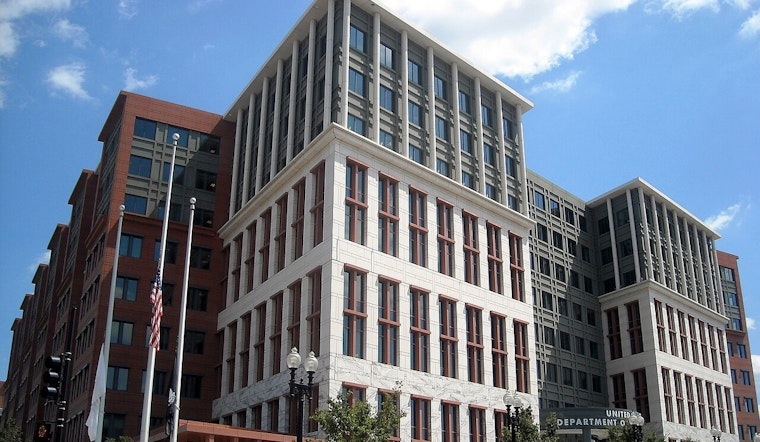
The tides of justice ebbed in favor of the future's highways as Attorney General Kris Mayes announced a court ruling against the U.S. Department of Transportation (DOT), which found that the DOT unlawfully withheld roughly $1 billion in funds designated for electric vehicle (EV) charging infrastructure, as reported by the Arizona Attorney General's Office. The funds were a part of the National Electric Vehicle Infrastructure (NEVI) Formula Program, a scheme in which Arizona joined 19 other states and the District of Columbia in legal action to reclaim promised financial support.
In the lawsuit arising from the suspension of the NEVI Initiative under President Trump's administration, a federal judge declared the freeze of funds as illegal, returning to Arizona's purse $15 million in current funding for Phoenix and additional opportunities for funding in the state, including Mesa, Cochise County the San Carlos Apache Tribal Nation, and Maricopa County despite these community previously benefitting from NEVI funds, the City of Phoenix experienced an interruption when it was selected for a CFI grant in January 2025 but then did not receive the $15 million initially awarded.
Sparked by a presidential executive order, the abrupt end to the NEVI program shook established plans to bolster nationwide electric vehicle charging stations, as financed by the 2021 Infrastructure Investment and Jobs Act (IIJA) that sanctioned $5 billion for such infrastructure improvements. It was in May of this legal skirmish that states led by attorneys general from Washington, California, and Colorado successfully clinched a preliminary injunction, and with the added weight of seven environmental non-profits, including the Sierra Club and the Natural Resources Defense Council, a further win has been secured, according to the Arizona Attorney General's Office press release.
U.S. District Court Judge Tana Lin, in her decisive summary judgment, emphasized transparent and lawful governance when she remarked that the actions of the DOT and the Federal Highway Administration (FHWA) were arbitrary and capricious, a stark contrast against lawful procedure as the agencies grappled with managing this saga of sustainability's progression. She further placed limitations on future conduct by DOT and FHWA, strictly barring them from tinkering with approved electric vehicle infrastructure plans or withholding funds without explicit congressional consent as ordained by the IIJA.
California, Colorado, Delaware, the District of Columbia, Hawai‘i, Illinois, Maryland, Minnesota, New Jersey, New Mexico, Michigan, New York, North Carolina, Oregon, Rhode Island, Vermont, Washington, Wisconsin, and not to be left unmentioned, the governors of Kentucky and Pennsylvania, all found common ground in this coalition, asserting their legal might back-to-back in a challenge that has now vindicated their collective conviction that future roads must be greener and that justice, at least in this chapter, has demanded adherence to the prescribed congressional path, according to the same press release.





