

























































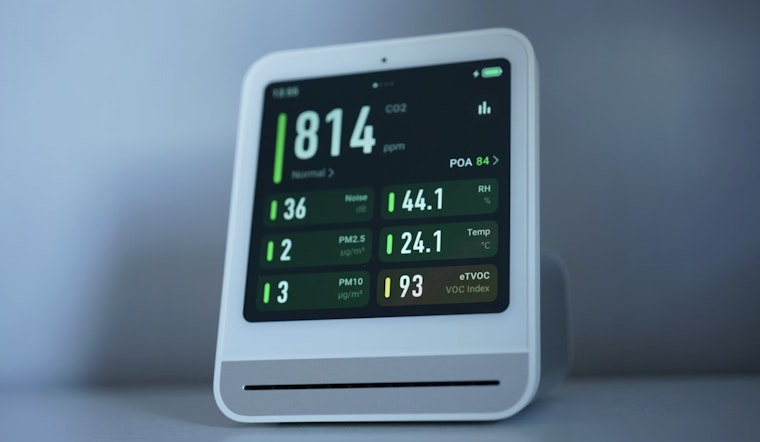
Washington State University is developing in-home sensor systems intended for health monitoring. The project, led by computer scientist Diane Cook, involves the use of unobtrusive and affordable sensors that record daily activity patterns within a residence. Machine-learning methods are applied to the data to detect changes in behavior that may be associated with health conditions. According to WSU News, the system is designed to support nurses and other healthcare professionals in identifying potential issues and to provide information that may help residents continue living at home.
As the population ages, sensor systems for monitoring daily activities have continued to develop over the past decade. According to Diane Cook, a Regents Professor at Washington State University, advances in machine-learning techniques have improved the ability to analyze routine behavior patterns and identify changes with greater accuracy. This progress has supported more individualized approaches to health monitoring, as reported by WSU News. Related research at WSU also extends beyond in-home systems, incorporating wearable technologies and smartphone applications, including efforts to embed small sensors into fabric and enhance AI tools that convert everyday activity data into usable health information.
Sterling McPherson, a professor and vice dean for research at Washington State University’s Elson S. Floyd College of Medicine, is examining the use of artificial intelligence in developing more personalized behavioral health applications, including mobile tools designed to support therapeutic care. His research includes a focus on co-addiction, a condition that often requires complex and multimodal treatment approaches. McPherson’s work explores how AI could be used to tailor treatment plans to individual needs and support the expansion of available treatment strategies.
Patients with type 2 diabetes at Three Rivers Family Medicine in Brewster, Washington, are set to take part in a Washington State University study that will test the use of a mobile app designed to support diabetes management. The app includes educational resources on type 2 diabetes, tracking features, and access to current research-based information. Anna Zamora-Kapoor, an associate professor at WSU who works with rural communities across Washington, noted in comments to WSU News that researchers are examining how the adoption of AI technologies may affect different populations, including the potential for unequal access or outcomes if some groups are better positioned to use these tools than others.
Washington State University researchers are examining ethical considerations associated with the use of smart technology, including issues related to privacy and data bias. Diane Cook’s work addresses how clinicians use data from in-home sensors to support care decisions, with attention to the sensitive nature of information collected in private living spaces. Researchers have noted the importance of handling such data carefully and ensuring that datasets represent a broad and diverse population rather than a limited subset. Preventing potential harm during data collection and use remains a central focus as WSU continues its research into AI-supported health technologies.



