

























































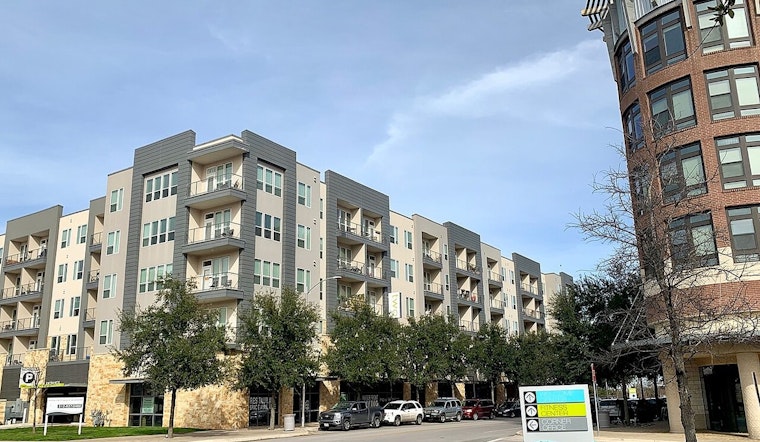
Austin renters who’ve been enjoying a rare bit of leverage may want to brace themselves. The city’s apartment market looks to be grinding through the worst of its oversupply slump and edging toward a rebound, with industry numbers suggesting builders are finally easing off the gas. Analysts say that the slowdown could open the door for landlords to push rents higher later in 2026.
According to Bisnow, Colliers projects asking rents in the Austin–Round Rock metro could climb roughly 14% by the end of 2026, nudging the metro average toward about $1,600 a month. The same report notes the market closed Q4 2025 with an average asking rent of $1,396, and that landlords trimmed prices by roughly $82 in the back half of 2025 to keep units filled.
Supply Finally Cooling After the Boom
The development wave that flooded the market in 2023 and 2024 is finally starting to recede, easing some of the pressure on occupancy and pricing. Market trackers show roughly 16,500 multifamily units were under construction in Q4 2025, a steep drop from nearly 27,000 at the same point a year earlier, and deliveries in late 2025 slipped below the 2024 pace. Matthews and other regional data providers say that the slowdown is the main reason analysts expect the market to rebalance.
That rebalancing is already visible in occupancy and leasing trends. Industry reporting shows occupancy dipped about 40 basis points to roughly 92.4% at year-end 2025 as net absorption turned negative in Q4, while completions pulled back to only a few thousand units for the quarter. CRE Daily has summarized Colliers' Q4 metrics and the shift from an expansion phase to a more demand-driven market.
Colliers' Forecast and What It Means
Colliers' outlook banks on demand outpacing new supply next year. The firm projects roughly 19,425 units of demand versus about 10,153 new deliveries in Q4 2026, a balance that would help occupancy climb back toward 95.2% and support renewed rent growth. Bisnow reports Colliers sees slower starts and a slimmer construction pipeline as the core ingredients of that recovery.
What Renters and Investors Should Watch
For renters, the recent slump translated into more concessions and some short-term price relief in late 2025, a break that could narrow if the pipeline keeps thinning and demand snaps back. National data from RealPage show Q4 2025 brought seasonal net move-outs and heavier concession activity, a reminder of how quickly the balance can swing back toward landlords if household formation and job growth pick up.
For sellers and investors, the 2026 storyline will revolve around starts and completions. If developers continue to scale back new projects and hiring and migration hold steady, Austin could shift from one of the country’s most supply-heavy metros to a market that tilts in favor of owners again. Watch monthly listings, new-start permits, and occupancy readings in early 2026 for the clearest signs that the recovery Colliers outlines is starting to show up in the numbers.





