

























































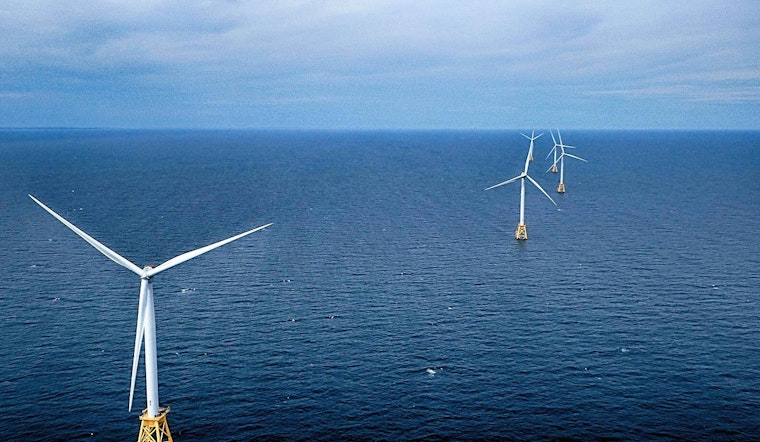
Massachusetts and Nova Scotia have inked a new offshore wind partnership at the State House, but anyone expecting a quick surge of cheap Canadian power into New England might want to take a breath. The early February memorandum of understanding commits the two governments to exploring coordinated offshore wind development and the potential export of Nova Scotian electricity to New England. It also sets up staff-level working groups focused on workforce training, port upgrades, transmission planning, and stakeholder engagement. Analysts caution that the MOU is essentially a planning move, and that steep transmission costs, complex permitting, and long equipment lead times could keep any exported power years away from showing up on local bills.
As reported by the Boston Business Journal, the pact is largely symbolic at this stage, and officials and industry analysts say big questions remain about who would foot the bill for long undersea cables, how cross-border regulatory alignment would actually function, and whether developers will see strong enough market signals to justify massive investments. The Boston Business Journal coverage highlights the trio of cost, permitting, and transmission as the central obstacles that must be cleared before Nova Scotian energy starts appearing on New England electricity statements.
What the MOU actually covers
The three-year agreement, signed by Gov. Maura Healey and Nova Scotia Premier Tim Houston, directs both governments to kick off staff-level technical talks on workforce development, port and supply chain upgrades, grid integration, and ideas for interregional transmission. According to Mass.gov, the focus is on information sharing and coordinated planning, not an immediate commitment to purchase power or lay undersea cables. The Province of Nova Scotia has similarly framed the MOU as a signal to developers that markets are maturing while the province moves ahead with its first licensing round.
Transmission costs and timing
Moving gigawatts of offshore wind energy from Nova Scotia into Massachusetts would likely require long submarine high voltage direct current (HVDC) cables, onshore converter stations and major upgrades to coastal ports, each carrying long lead times and hefty price tags. A recent Stantec study, reported by The Canadian Press via Global News, finds the realistic offshore wind development potential in Atlantic Canada is smaller than some political estimates and warns that transmission alone could account for roughly one third of the roughly $60 billion price tag floated for the Wind West concept, which would push large scale exports into the 2030s. The study also notes that seafloor conditions, ice, shipping lanes and fisheries interactions are constraints that add both cost and complexity.
Permitting and legal risk
Permitting remains a significant risk factor for any large offshore project on either side of the border. In the United States, federal approvals can be revisited. AP News reported that a federal judge recently ordered the Bureau of Ocean Energy Management to reconsider a construction approval for a Massachusetts project, a reminder that legal challenges and federal review can stall development. That kind of uncertainty makes it harder to design cross jurisdiction transmission and commercial arrangements that lenders and developers are willing to finance.
Next steps and timing
The MOU instructs staff-level working groups to convene, share technical information and float non binding requests for information to test feasibility and cost. Nova Scotia has already designated four offshore wind energy areas and launched a pre qualification process. Industry coverage indicates the province’s first formal call for bids and parcel licensing could arrive in the coming months, which will be decisive for whether export pathways are practical, according to OffshoreWind.biz. Those procurement decisions will influence project economics and the schedule for any future undersea cables to New England.
What it means for Massachusetts residents
For Bay State households, the MOU widens the menu of planning options but does not solve higher winter demand or energy prices in the near term. State officials point to Vineyard Wind, which began delivering power in 2025, as proof that offshore projects can add capacity and jobs, but importing Nova Scotian energy still depends on cracking the intertwined problems of cost, permitting and transmission first, according to Mass.gov. Lawmakers, utilities and developers are expected to watch the working groups closely, since this deal mainly creates a framework to test whether cross border wind can move from aspirational talking point to a bankable project.




