

























































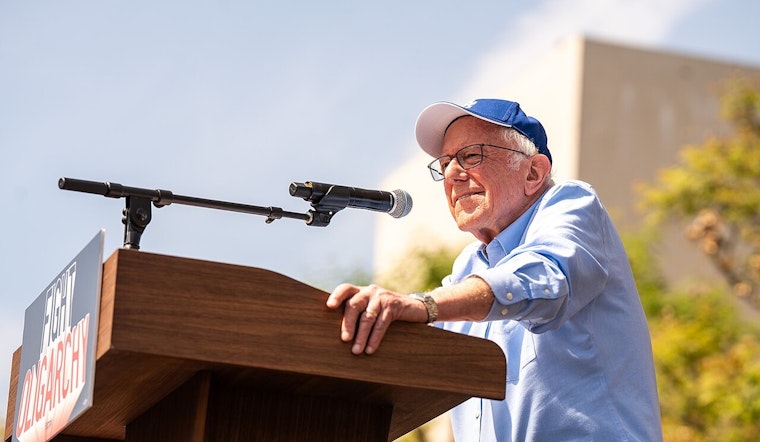
Sen. Bernie Sanders is set to roll into Koreatown on Feb. 18, headlining a Los Angeles kickoff for a labor-backed push to slap a one-time 5% tax on California billionaires this November. Backers are banking on the Vermont senator’s star power to supercharge a frantic signature drive that runs through late June, while they argue the levy is an emergency fix to keep the state’s healthcare system from taking a major hit.
Sanders has lined up behind the initiative as a way to prevent more than 3 million working-class Californians from losing health coverage, according to the Los Angeles Times. The paper reports he will appear Feb. 18 at the Wiltern in Koreatown to formally kick off the petition effort.
What the proposal would do
The measure is filed and sponsored by Service Employees International Union-United Healthcare Workers West and would impose a one-time 5% levy on covered assets for Californians with more than $1 billion in net worth, with most of the money earmarked for Medi-Cal and related health programs, as outlined by SEIU-UHW. The Associated Press reports that backers estimate the initiative could raise roughly $100 billion, with about 90% dedicated to healthcare and the rest going to food assistance and education.
Signature push and timetable
Organizers began collecting signatures in January and need roughly 875,000 valid signatures from registered voters to land the measure on the November ballot, the San Francisco Chronicle reports. If it qualifies and passes, the Chronicle’s analysis finds that more than 200 California billionaires would be subject to the levy, and the campaign will need a sustained, well-funded signature-gathering operation through late June to get there.
Backers and critics
Supporters pitch the tax as an emergency response to steep federal Medicaid cuts that they say threaten hospitals and health coverage for vulnerable Californians. The Associated Press notes that Gov. Gavin Newsom has criticized the proposal, and Yahoo News reports that San Jose Mayor Matt Mahan has also come out against it.
Legal and enforcement questions
Policy and tax experts warn that the initiative’s residency cutoff, rules for valuing private companies, and anti-avoidance language are almost certain to draw pre-emptive lawsuits if the measure reaches the ballot, with courts likely to shape how far the law can actually reach, according to the San Francisco Chronicle. Supporters say they built safeguards into the text, but tax lawyers counter that the fine print, especially around founders’ voting shares and valuing illiquid assets, will be front and center in any courtroom fight.
What to watch next
The Sanders rally at the Wiltern will be an early test of whether political celebrity and union muscle can turn buzz into signatures and small-dollar donations; the Los Angeles Times reports that Sanders will share the stage with musical acts and other speakers. Early polling and initial signature counts will be key indicators: a January Hoodline piece reported that support slipped under 50 percent in late January. The coming weeks will show whether labor’s ground operation can keep pace with the deep-pocketed opposition that has already begun to organize.





