

























































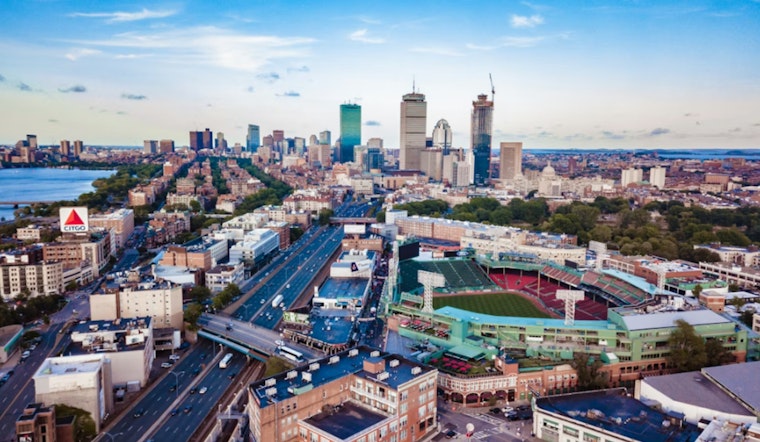
In and around Boston, would-be homebuyers are running headfirst into a brutal reality: higher asking prices and bigger down payments than ever. For many households, that old 20 percent benchmark feels less like solid advice and more like a bad joke, so mortgage pros are turning to grants, low-cost second loans and some careful financial triage to get deals across the finish line. Here is how the money is actually coming together in this market.
What local lenders are seeing
Loan officers across Greater Boston are reporting serious sticker shock, according to Boston.com. Julian Hernandez of Fairway Independent Mortgage told the outlet that “things have never cost more, and people are struggling to find the income to offset that,” adding that lenders are increasingly helping buyers chase down grants and city-backed support.
A national look from LendingTree found that Massachusetts buyers now report a median planned down payment of roughly $85,000, second only to California. Across the country, the typical buyer is planning about $45,000. That gap is magnified by local pricing pressure: the median single-family price in Greater Boston topped $1 million last July, according to the Boston Globe.
State programs that can chip in
To blunt some of that shock, MassHousing expanded its Down Payment Assistance program in 2025 and introduced several tiers of help. The agency now offers up to $30,000 in deferred, zero-percent assistance for households at the lowest income levels, along with up to $25,000 at low fixed rates for moderate and middle incomes. MassHousing also loosened geographic restrictions and increased income limits, which means some buyers in eastern Massachusetts can qualify at significantly higher household incomes than before.
City help and ONE+Boston
Inside city limits, Boston’s Home Center layers on its own support for first-time buyers, pairing a local grant with state-backed tools. Income-eligible purchasers can receive a grant that scales with the purchase price, up to set caps, and combine that with interest-rate discounts available through ONE+Boston for qualifying borrowers. Details on both the city grant and ONE+Boston are laid out on the City of Boston site, and these benefits can be stacked with state assistance to shrink the cash a buyer needs at closing.
How buyers are bridging the gap
On the ground, lenders and brokers say successful buyers are piecing together multiple strategies. Common moves include consolidating high-interest consumer debt to improve debt-to-income ratios, leaning on MassHousing down payment loans or local grants, and using employer benefits or family gift funds to cover closing costs. As Boston.com noted, many local lenders keep running lists of city and nonprofit grant programs and will pre-screen buyers to match their income and neighborhood with available help.
For anyone trying to buy in this market, the usual starting point is a conversation with a MassHousing-approved lender or the Boston Home Center to map out what is on the table. A relatively small second loan or a targeted city grant can shave months or even years off a savings plan and still keep an offer competitive without a full 20 percent down. In practice, the path to homeownership for many Boston-area buyers now runs through some mix of state down payment assistance, local grants and mortgage products that accept 3 to 5 percent down.





