

























































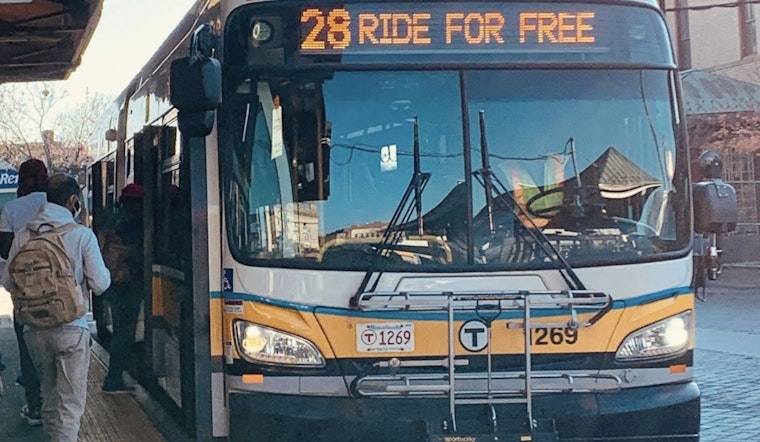
In a move that will please many Boston commuters, Mayor Michelle Wu has declared the extension of the city's fare-free transit pilot until the end of June. Initially, set to end this month, the program applies to Routes 23, 28, and 29 has been wildly successful, spurring a significant uptick in ridership, even surpassing MBTA's overall growth rates. According to Boston's official announcement, these specific routes experienced a 35% growth in the first year alone, which is more than double the system's average, carrying 16% more riders than before the pandemic. Mayor Wu was upbeat about the results, "Fare-free bus service helps families, workers, and businesses, and also makes bus service faster and more reliable," she told the City of Boston.
These impressive stats are not just about numbers on a paper, though. Real-life implications such as faster service and reduced commuting costs are affecting everyday people. All-door boarding implemented through this pilot, cut dwell times roughly by 20%, leading to quicker journeys for everyone. A quarterly meeting to discuss public transports might not seem like the most riveting subject matter, but when you're standing less at the bus stops and more in the places you need to be, it matters. Families have benefitted financially, with more than a quarter of riders saving an average of $20 a month. Mayor Wu highlighted the tangible benefits saying, "Carrying 16% more riders than before the pandemic and cutting dwell times by about 20% through all-door boarding, the buses have stayed on schedule even while carrying more passengers," as noted by the city's official website.
The financial underpinning for the pilot is fueled by ARPA dollars, with the City designating about $340,000 monthly to reimburse the MBTA. While budget projections allow the pilot extension through June, long-term viability and potential permanent implementation remain in talks with MBTA. The riding public has expressed positive sentiments, finding the free rides not only a convenient mode of commute but also a means to manage their expenses better—money that has found its way towards school supplies, groceries, and other essentials, as indicated by surveys mentioned by the City of Boston.
Interim Transportation Secretary and MBTA General Manager Phillip Eng pointed out in the city's release the broader initiative to enhance transit access, stating, "Under the Income-Eligible program, nearly 36,000 people are paying significantly reduced fares across every mode of transit, including bus." This echoes the city officials' sentiments, focusing on enriching the lives of their commuters. Nick Gove, Interim Chief of Streets, backed up such efforts with services that allow residents to save time and access cost-effective transit options. "Fare-free transit ensures more reliable, efficient transit for everyone," he explained, acknowledging the MBTA's collaborative role.





