

























































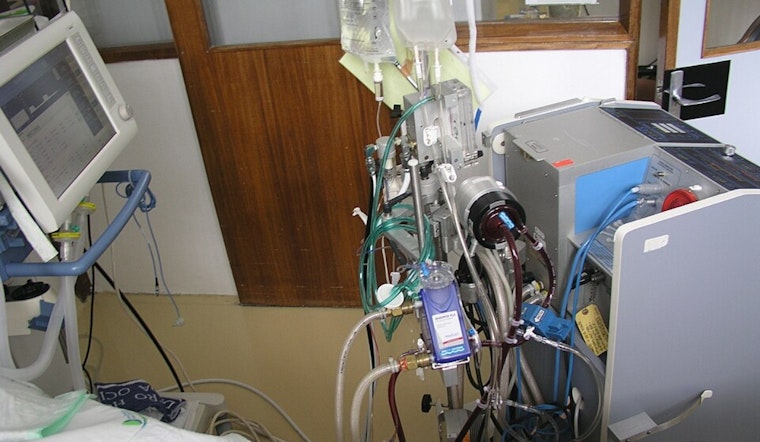
TriHealth Heart Institute has brought one of medicine’s most aggressive lifesaving tools into its Cincinnati heart program, adding extracorporeal membrane oxygenation, or ECMO, for patients whose hearts or lungs are failing. The rollout lands right in the middle of Heart Awareness Month and gives the region another high-level option for complex cardiac and critical-care cases when seconds really count.
TriHealth’s program is "one of a handful in the region" now using ECMO, and getting a patient onto the machine fast can mean the difference between life and death, TriHealth cardiothoracic surgeon Dr. Eric Okum told WKRC. He explained that ECMO "allows patients that have failing hearts or lungs or a combination of both to be supported while there heart can recover or get the adequate therapy that they need" and is most commonly used after major heart events or heart surgery, with occasional use in obstetric emergencies when a pregnancy or delivery suddenly turns critical.
What ECMO Does and How It Works
Extracorporeal membrane oxygenation uses an external pump and oxygenator to temporarily take over circulation and gas exchange so the body’s organs can rest, heal, or undergo treatment, according to the Extracorporeal Life Support Organization. The system can be set up for combined heart-and-lung support (VA ECMO) or lung-only support (VV ECMO), and it may stay in place for hours, days, or, in rare situations, even longer, depending on what a patient’s condition demands.
TriHealth’s Mechanical-Support Push
TriHealth leaders say the new ECMO capability builds on several years of work to centralize cardiac surgery, expand the cardiovascular ICU, and grow a mechanical circulatory support program that already includes LVAD implants and dedicated ECMO team training. An internal update from the system notes that those investments helped make sure the staff, protocols, and physical space were in place to run ECMO safely for the sickest patients, as per the TriHealth weekly update.
Regional Access and Transfers
Across Greater Cincinnati, ECMO capacity is still concentrated at a small number of larger centers, and the ELSO center directory lists TriHealth’s Bethesda North program among local facilities with ECMO capability. That limited availability helps explain why patients at smaller hospitals are often transferred out for advanced support.
Some health systems have tried to shrink that transfer gap with dedicated transport options. UC Health, for example, began adult ECMO helicopter transport to move candidates into specialized care as quickly as possible.
Real Patients, Real Outcomes
Local cases have shown just how decisive ECMO can be. A TriHealth-supported college athlete survived a massive pulmonary embolism after being placed on ECMO, according to the Cincinnati Business Courier. A separate TriHealth patient story describes a maternity emergency at Bethesda North that required ECMO support to get both mom and baby through a crisis, according tothe TriHealth blog.
Doctors say those kinds of outcomes are why speed matters so much. "Getting a patient on the system quickly is often critical to survival," WKRC reported, and TriHealth says it aims to cut transfer times so more patients in the Tri-State can receive advanced care without long, risky transports. For now, the new ECMO capability at TriHealth’s Heart Institute gives Cincinnati-area clinicians another high-powered option when the heart or lungs suddenly fail.



