

























































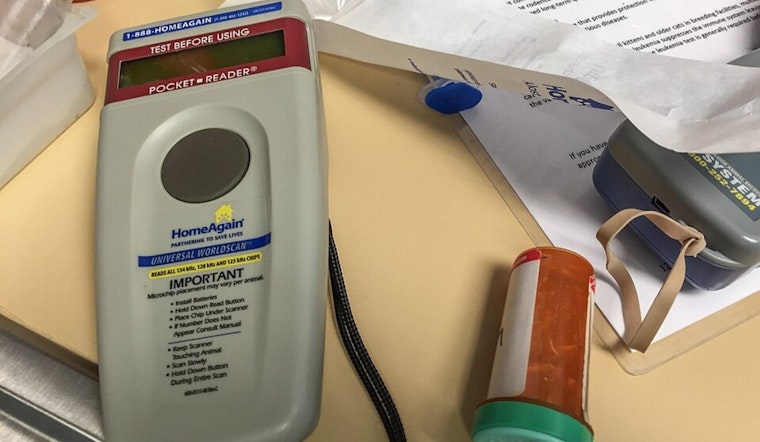
If you have been counting on a microchip to bring your lost pet home, Cincinnati Animal CARE says you might want to double-check that faith. The shelter is warning that some chips it scans now point to a registry that quietly shut down in early 2025, which means the chip still broadcasts an ID number but no longer leads to any owner contact information.
Shelter staff say they have already found 65 dogs with microchips registered to Save This Life. About half of those pets ultimately made it back to their families, but six were still sitting unclaimed at the shelter, according to WKRC. One of the cases, a 6-year-old shepherd shelter staff nicknamed "Phil Collins," showed how the problem plays out in real time: scanners could read the chip, but the number did not connect to any owner. "The result was that any microchip that was registered with Save This Life is no longer registered," Miriam Laibson, Microchip Registry Director at 24PetWatch, told WKRC.
Industry groups say Save This Life, a Texas-based microchip provider, ceased operations in early 2025 and was disconnected from AAHA’s universal microchip lookup after repeated search failures, according to reporting in The Washington Post. Veterinary clinics and shelters reported that company phone lines and emails went unanswered, and state records show the business registration was marked inactive. As a result, some scanned chips now spit out nothing but a long ID string with no working trail back to the owner.
How to check your pet's chip
The first step is simple: have a veterinarian or local shelter scan your pet to pull up the chip’s ID number. "Contact your veterinarian to determine if you need to re-register," the American Animal Hospital Association (AAHA) advises on its lookup page, which lets users plug a chip number into the AAHA Microchip Registry Lookup to see which company is supposed to hold the registration. If your pet’s chip number begins with 991 or 900164, it is likely tied to Save This Life and should be re-registered with an active registry instead of replacing the chip itself.
Who’s offering help
Some companies moved quickly once the shutdown came to light. Creative Science’s BuddyID brand temporarily offered free lifetime registration to pets affected by the Save This Life collapse, according to a company release reported by PR Newswire. Veterinary groups and shelters are also steering pet owners toward freepetchipregistry.com and long-running registries such as HomeAgain, AKC Reunite and PetLink to get chips properly registered again, as reported by dvm360.
Why this matters
Veterinary guides remind owners that microchips are passive ID devices, not GPS trackers, and they only work if the registration database holds accurate, current owner information. Studies have found that microchipped animals are far more likely to make it home when those records are intact and up to date; losing the registry in the middle effectively cuts the lifeline, according to Merck Animal Health's microchipping guide. The Save This Life shutdown has prompted shelters and clinics to ramp up reminders for adopters and clients to get chips scanned and registrations checked on a regular basis.
For pet owners worried their animal might be affected, the advice is to act now rather than wait for a crisis. Have a veterinarian or shelter scan the chip and confirm where it is registered; many registries will transfer an existing chip number into a live database at low or no cost. In Cincinnati, owners who need help can contact their veterinary clinic or Cincinnati Animal CARE to set up a scan and re-registration so that a "chipped" pet does not turn out to be effectively anonymous when it matters most.





.jpg)