

























































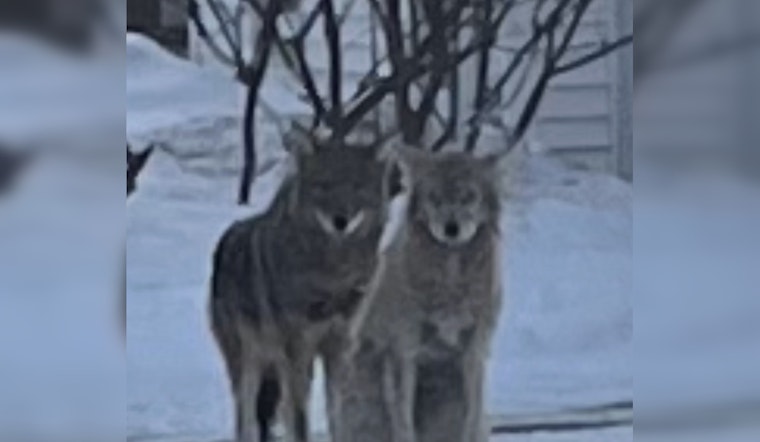
Coyotes are making the rounds in Newton again, and this time police have the photos to prove it. Over the weekend, the Newton Police Department shared images of the animals taken in the Nonantum neighborhood last week and warned that reports of sightings are on the rise across the city. Officers urged residents to keep a close eye on pets, secure trash, and remove outdoor food or rodent hotspots that might lure coyotes closer to homes. The post also pointed residents to local animal control contacts and the city’s online coyote reporting map.
Police Photos And Local Guidance
The Newton Police Department laid out its warnings and recommendations in a Facebook post, noting that the photos were taken in Nonantum and that coyote sightings have ticked up citywide, according to the department's Facebook post. The guidance for residents is straightforward: keep pets on a leash and under direct supervision, feed animals indoors, and tighten up trash and compost bins so coyotes are not rewarded for nosing around.
State Wildlife Advice During Mating Season
State wildlife officials say this is exactly the time of year when coyotes get more noticeable. Mating season typically runs from late January through early March, a stretch when the animals can be more active and more territorial, according to MassWildlife. The agency advises residents to protect pets, remove human-associated food sources, and use hazing techniques if they encounter a coyote. That can mean yelling, waving your arms, blasting an air horn, spraying a hose, or tossing small objects in the animal’s direction, but not from inside a vehicle or behind a screen door.
How Newton Is Tracking Sightings
City officials are also trying to keep a handle on where coyotes are popping up. Newton maintains an online reporting map that lets residents log coyote sightings and see where others have recently reported activity; the map notes that submissions are reports only and are not verified by inspectors, according to Newton’s coyote reporting page. Police are urging neighbors to use the tool so they can track patterns and respond if behavior looks concerning.
Safety Steps And When To Call
Experts and local officials are largely on the same page about precautions. They recommend keeping cats indoors and walking dogs on short leashes, instead of letting pets roam or supervising them from a distance. Pet food should stay inside, not out on porches or decks where it can act like a dinner bell. If a coyote shows aggressive behavior or refuses to leave after being hazed, residents are advised to call Newton Animal Control at (617) 796-2109 or contact the police, according to the Newton Police Department. Officials say 911 should be reserved for situations where there is an immediate threat to public safety.
Why Sightings May Be Up
Police suggested that recent winter storms may be helping push coyotes out into the open. Snow can cover natural burrows and food sources while making shoveled sidewalks and plowed paths easier to travel, which can send hungry animals farther afield in search of a meal. When that is layered on top of breeding season activity, residents are more likely to spot coyotes moving through neighborhoods, according to the department's Facebook post and state wildlife guidance from MassWildlife.
Longer-Term Context
Coyotes are not exactly new neighbors in Newton. They have been seen slipping through yards and occasionally preying on small pets for years, with residents periodically raising alarms and asking what can be done. Local coverage has generally emphasized coexistence and prevention strategies rather than trying to remove the animals outright, according to reporting in the Boston Globe. Officials say non-emergency concerns can go through the city’s coyote reporting map or Animal Control, while aggressive or threatening behavior should be reported to police immediately.





