

























































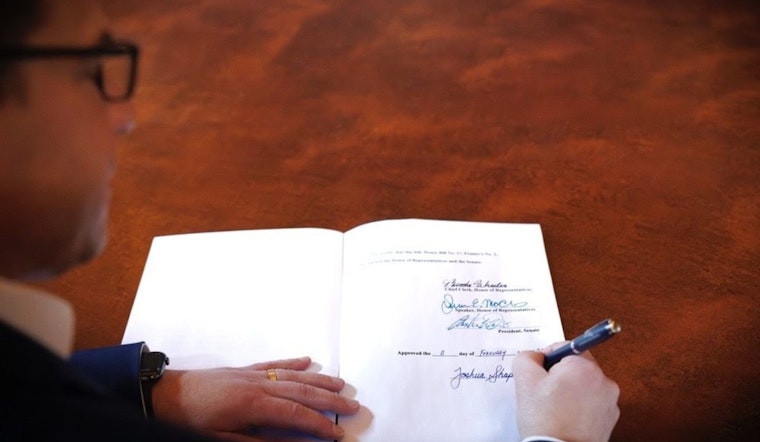
Cursive is officially making a comeback in Pennsylvania classrooms. Gov. Josh Shapiro has signed a new law that puts the looping script back on the list of required subjects in the state’s Public School Code, meaning every elementary public and private school will now have to teach it. The change has district leaders already wondering where, exactly, they are supposed to squeeze another requirement into school days that are already packed. Supporters say the move will shore up basic skills and civic literacy, while skeptics argue that the real test will be how the mandate is rolled out.
Shapiro announced he had signed House Bill 17 on social media and joked that he used his “best cursive,” according to CBS Pittsburgh. The outlet quoted his self-deprecating post — “I’m definitely rusty, but I think my penmanship was okay!” — as his administration confirmed the bill’s approval on Wednesday.
What the law requires and when it kicks in
House Bill 17 rewrites Section 1511 of the Public School Code of 1949 so that writing instruction must now include “writing, including print, joined italics and cursive handwriting,” according to the Pennsylvania General Assembly. Lawmakers sent the bill to the governor earlier this month, and he signed it on Wednesday; the act states it “shall take effect in 60 days,” which the bill information lists as making the new requirement effective April 12, 2026. Legislative records show the measure sailed through with wide bipartisan support, passing the House 195–8 and winning final Senate approval 42–5.
Why lawmakers pushed the change
Bill sponsor Rep. Dane Watro has argued that cursive is not just nostalgic flair, but a practical tool that supports brain development, fine-motor skills and the ability to read original historical documents. In a statement shared by the Pennsylvania House Republican Caucus, Watro called cursive “more than handwriting” and “a bridge,” and pointed out that at least two dozen other states already require it. Backers say the law simply restores a basic classroom skill and argue that it can coexist with, rather than replace, digital literacy.
Classroom questions and next steps for districts
The statute itself is relatively bare bones. It adds cursive to the list of required subjects but does not spell out grade-by-grade expectations, provide dedicated funding or dictate a single curriculum, leaving those decisions to the State Board of Education and local districts, according to the bill language. That timeline gives districts roughly two months to prepare lesson plans and teacher supports before the April 12 effective date, and superintendents will have to decide how cursive fits into existing reading and writing blocks without blowing up the rest of the schedule.
For now, the law is narrow in its scope: it restores a requirement and shifts the debate from whether cursive belongs in elementary classrooms to how it should be taught and measured. Parents and educators hunting for specifics will need to keep an eye on the bill’s legislative page for the official text and watch for guidance from the State Board and local districts in the coming weeks.





