

























































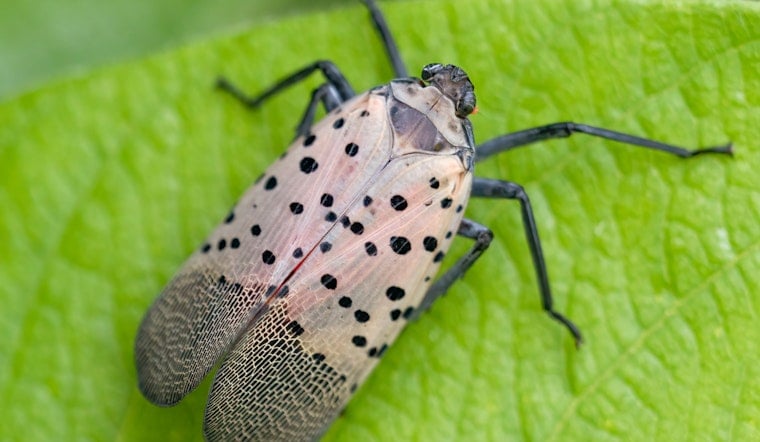
Pennsylvania’s two U.S. senators are teaming up across party lines to take another swing at one of the state’s most destructive agricultural pests. John Fetterman and Dave McCormick are pushing a bill that would direct federal research money toward stopping spotted lanternflies before the tiny invaders do even more damage.
The Spotted Lanternfly Research and Development Act would make the invasive insect a high-priority research and extension initiative, allowing grants for new tools, treatments and ways to slow its spread. A MyFox28 Columbus report said the legislation is intended to help researchers develop and distribute those treatments, while a Fetterman office release described the measure as a way to elevate spotted lanternfly research within the U.S. Department of Agriculture.
This is not Fetterman’s first attempt to get the idea through Congress. A similar Senate bill introduced with former Sen. Bob Casey in 2023 was referred to the Agriculture Committee, but the Congress.gov record shows no later Senate action.
Pennsylvania’s Farm Economy Is The Pressure Point
The bug may be small, but the potential price tag is not. Penn State Extension says an uncontrolled spotted lanternfly infestation could drain Pennsylvania’s economy by at least $324 million annually and cost more than 2,800 jobs.
The insect feeds on a wide range of plants, including grapevines, apples, peaches, hops and hardwood trees. It was first detected in Pennsylvania in 2014, and Fetterman’s office has said the pest has already cost the state millions of dollars and thousands of jobs, according to the reported bill details.
Pennsylvania is also no longer the only state dealing with the colorful, sap-sucking nuisance. The USDA’s APHIS says spotted lanternflies now have some degree of infestation in 19 states and the District of Columbia, with the insects able to hitchhike on vehicles, outdoor furniture, firewood and other hard surfaces.
Recent Hoodline coverage of sightings across Tennessee offered another reminder that the infestation is moving well beyond its Pennsylvania starting point. That widening footprint is part of the argument for research that can travel across state lines instead of leaving each agricultural region to improvise its own defense.
The Bill Still Has A Long Road Ahead
The Senate effort is moving alongside a House counterpart, H.R. 4708, introduced in July 2025 by New York Rep. Joe Morelle. The House bill record lists 40 cosponsors, including lawmakers from Pennsylvania and New York, but says it remains referred to the House Agriculture Committee.
That means the new bipartisan push is a research investment, not an instant extermination program or a new statewide quarantine. For farmers, vineyards and orchard operators, the practical payoff would come later through better detection, more effective treatments and a clearer playbook for keeping the lanternfly from eating into the state’s next harvest.



.jpg)