

























































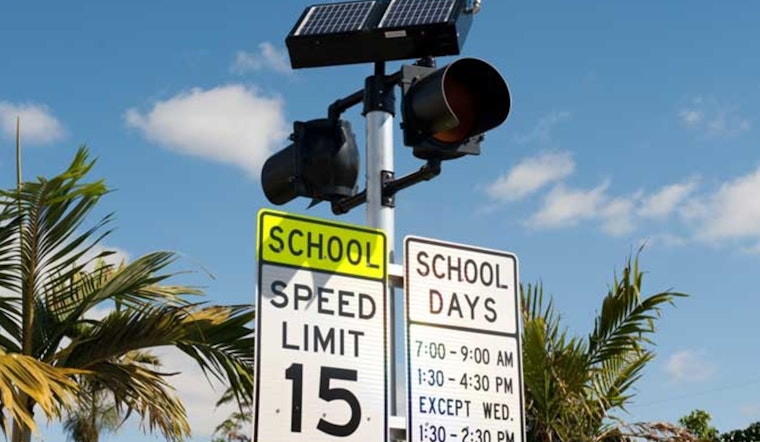
Miami drivers who treated a dark school-zone beacon as a green light to cruise at normal speed are suddenly finding out how wrong they were, courtesy of $100 envelopes in the mailbox. A Miami Herald report published Feb. 27, 2026, detailed how county cameras can issue civil citations during the entire school day, not just when yellow lights are flashing, under current rules. That revelation has drivers, parents and some lawmakers asking whether the program was ever explained clearly before enforcement kicked in.
Why the lights don't matter
State law now allows counties to use speed-detection systems in school zones during school sessions, which can include the full school day. That means cameras may ticket motorists who are more than 10 mph over whatever speed applies at that moment, even when the flashing beacons are off, as reported by Local 10. The change comes from House Bill 657, which took effect on July 1, 2023, and set rules for signage, warning periods and violation thresholds. Because local jurisdictions can choose their own operating windows, drivers who cross county lines may face different rules on the same day.
How Miami‑Dade runs the cameras
Miami-Dade County says it activated the RedSpeed photo-enforcement system in November 2024 and that cameras are active during the full "school day session," enforcing a 15 mph limit around arrival and dismissal and the normal posted limit for the rest of the day. Notices are generated when a vehicle exceeds the speed limit in force by more than 10 mph, and drivers have 30 days to pay or request a hearing before a violation can be upgraded to a formal traffic citation, according to Miami-Dade County. The county's FAQ also explains how the $100 fine is divided among state and local funds.
Drivers say they're blindsided
Residents told reporters they were stunned to receive multiple notices tied to the same school run, and some for times they believed were outside enforcement hours. "The schools are still functioning and there are kids that are still going to school," Deputy Joseph Peguero told CBS News Miami. The station found that the program continued issuing notices through the summer session in some areas, and that confusion over the exact hours has fueled calls for clearer signage and more outreach.
Money and transparency
The money trail is only turning up the heat. Miami-Dade's public materials show the county keeps $60 of each $100 notice and sends the remaining $40 to state and school-related funds, while a December memo reported by the Miami Herald indicated the vendor kept roughly $20 of every $100, an apparent discrepancy that critics and commissioners say needs an explanation. The Herald also reported the county's program generated more than $2 million a month last summer, figures that have intensified scrutiny of the contracts and revenue-sharing. Those county documents and independent reporting are now being used to press for clearer accounting and potential audits of the deals.
Lawmakers push fixes
Some state lawmakers are drafting changes aimed at narrowing enforcement windows and cutting down on ugly surprises for drivers. Proposals under discussion would limit camera citations to pick-up and drop-off times and require beacons to be flashing before a citation can be issued, a shift that supporters say would sync enforcement with the way drivers have long understood school zones. Any such measures would still have to survive committee hearings and floor votes in Tallahassee before they could become law.
Other counties have paused enforcement
Not every county is charging ahead. Osceola County paused camera-issued citations while officials wrestled with questions about where cameras must be placed and how to read the placement rules, and they dismissed contested notices while seeking guidance, according to reporting by Spectrum/MyNews13. That pause shows why drivers in different parts of Florida are seeing different approaches and why courts and agencies are being asked to sort out the fine print. The patchwork has become part of the broader policy fight over automated enforcement.
What to do if you get a notice
If a notice lands in your mailbox, the clock starts fast. You generally have 30 days to pay, request an administrative hearing or submit an affidavit that someone else was driving, and ignoring it can turn a civil notice into a uniform traffic citation with higher fines and court costs, Miami-Dade County materials explain. Drivers who believe a camera captured the wrong vehicle can challenge the evidence at an administrative hearing, and if a notice is elevated, that fight can move to traffic court. Keeping the paperwork, marking the date on the notice and meeting the deadline are key to preserving contest rights.
For now, the bottom line for Miami drivers is simple and not especially comforting: if school is in session, the cameras may be live, lights or no lights. Expect hearings, audits and possible statutory tweaks as officials and lawmakers try to catch up with the backlash.



