

























































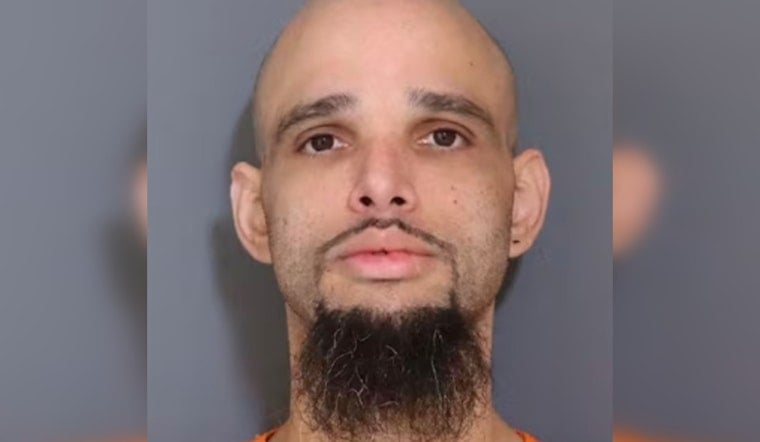
Nearly 14 years after Gladys Machado and her two young daughters were found suffocated inside a bedroom closet in Flagami, the man who killed them has pleaded guilty to nine felonies, leaving a jury to decide whether he lives or dies. Alberto Sierra, now 42, admitted in court to suffocating his estranged wife and her daughters, 8-year-old Julia Padron and 4-year-old Daniela Padron, with a plastic bag inside their home on the 7300 block of Northwest Fourth Street.
Sierra entered his plea before Miami-Dade Circuit Judge Marisa Tinkler Mendez without any deal in place with prosecutors, according to the Miami Herald. He pleaded guilty to three counts of first-degree murder, three counts of kidnapping, two counts of abuse of a dead human body, and one count of armed burglary — a full accounting of a case that has sat unresolved since the killings on November 10, 2012. Jury selection for the penalty phase is scheduled to begin August 17, when 12 jurors will weigh whether Sierra is sentenced to Florida's death row or to life in prison, according to Local 10 News.
A Mall Trip Preceded the Killings
Machado, 29, had gone shopping with her daughters at the Mall of the Americas the day she died, and Sierra accompanied them, per the Miami Herald's reporting. He then drove Machado and the girls back to their Flagami home. Machado had left her 6-year-old son with his grandmother that day, and she had a history of domestic violence with Sierra, who told detectives he stabbed her inside her car after she took a phone call from another man.
Machado worked as a registrar at Beauty Schools of America in Miami and had formally separated from Sierra shortly before her death, moving into her grandmother's home in Homestead while Sierra moved in with his mother in Kendall, according to the Los Angeles Times. According to police arrest affidavits, Sierra locked the two girls in a separate bedroom before suffocating Machado with a plastic bag, then took one daughter from her room and suffocated her, and suffocated the second daughter while she slept, as detailed by NBC Miami.
Bodies Went Undiscovered for Three Days
A neighbor found the bodies inside a bedroom closet three days after the killings, on November 13, 2012, per the Miami Herald. Investigators say Sierra raped Machado after her death, and investigators also say he raped Julia Padron after she died. Miami-Dade police had previously investigated Sierra after Julia told a teacher he had bitten her; the Department of Children and Families looked into the incident, and police concluded at the time that the bite had been playful, so no charges were filed. Child-welfare investigators later determined the bite had in fact been child abuse, and DNA samples from Julia Padron matched Sierra.
Sierra voluntarily went to a Miami-Dade police station for questioning on November 14, 2012, four days after the murders. Investigators initially interviewed and released him without charges before obtaining a full confession days later, according to CBS Miami. Officers eventually discovered Machado's 2004 gold Nissan Altima parked in a guest spot at Kendall's Calusa Club Apartments at 8810 SW 132nd Avenue, and according to police, the car had been backed into bushes to conceal its tag number. A woman near Machado's home reported seeing the Altima on the evening of the murders, and the car was gone by 11:30 pm that night, per the Miami Herald's reporting. Investigators found blood on both the passenger and driver-side seats, and fingerprints at the scene were linked to Sierra, according to prosecutors.
A Criminal History and a Violated Probation
At the time of his 2012 arrest, law enforcement records noted the then-28-year-old Sierra had a tattoo reading Eleggua — a Santeria deity — on his left arm, and had prior convictions for assault, drug possession, and illegal firearm possession by a felon, according to the Los Angeles Times. Sierra had been convicted on drug and weapons charges and, as a felon, could not legally possess a firearm; police nonetheless located a gun inside the home. He had been released from jail five months before the murders and had violated his probation. When questioned by police, Sierra reportedly answered simply, “Yes, ma’am.”
The detective who led that 2012 investigation, Rosie Cordero-Stutz, has since been elected Miami-Dade Sheriff, according to Local 10 News. The case now returns to a courtroom nearly 14 years after Sierra was first taken into Miami-Dade Corrections custody on November 20, 2012 — a gap Sierra himself acknowledged before Judge Tinkler Mendez.
Death Penalty Decision Rests on a Lower Jury Threshold
The 12-member jury that convenes for Sierra's penalty phase will operate under a legal standard that did not exist when the murders occurred. Under Florida Senate Bill 450, enacted in April 2023, juries are no longer required to reach a unanimous 12–0 vote to recommend a death sentence; a recommendation can now be reached with as few as 8 of 12 jurors in agreement, according to WUSF. In December 2025, the Florida Supreme Court upheld the constitutionality of that non-unanimous capital sentencing law, affirming that Florida maintains the lowest jury threshold for death penalty recommendations in the country, as reported by AP News.
That means Sierra's fate no longer requires the full consensus that once governed Florida capital cases. Jury selection begins next Monday, and the panel that emerges will ultimately decide whether Sierra is sentenced to death or to life in prison for the murders of Gladys Machado, Julia Padron, and Daniela Padron.



