

























































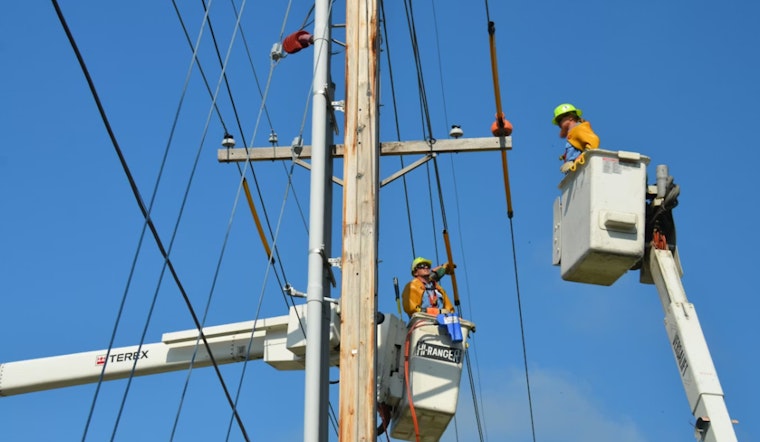
Across Oklahoma, people are eyeing their power bills as a wave of data centers and other heavy-hitting industrial customers lines up to plug into the grid. Public Service Company of Oklahoma has asked state regulators for a base-rate review that, if approved as filed, could bump the average residential bill by roughly 15 percent, or about $25 a month for a household using 1,100 kilowatt-hours. Lawmakers and regulators are now scrambling to sort out who should cover the tab for new infrastructure while utilities insist the work is needed just to keep the lights on.
PSO filed its base-rate review on Jan. 2 and says the requested increase would pay for grid upgrades, vegetation management and new generation projects, and that the final outcome could shift as the review plays out, according to Public Service Company of Oklahoma. Federal data show that retail electricity prices have risen faster than inflation since 2022, the U.S. Energy Information Administration reports, and analysts say the rapid build-out of hyperscale data centers is one of the drivers. The Pew Research Center estimates that U.S. data centers consumed about 4 percent of national electricity in 2024 and that demand could grow by roughly 133 percent by 2030, piling extra pressure on local grids.
Utilities say upgrades can't wait
Utility executives told the Oklahoma Corporation Commission last year that projected demand growth is "increasing exponentially" and argued that pre-building generation and transmission is part of the solution, according to The Journal Record. PSO has said large customers are expected to shoulder the direct costs to connect to the grid and that it is working on a large-load tariff that would apply consistently across its rate structure. Regulators say tariffs like that, if crafted carefully, can shield ordinary customers by requiring big power users to pre-fund upgrades or sign long-term contracts instead of leaving everyone else holding the bag.
Lawmakers push for safeguards
At the Capitol, legislators have rolled out a slate of bills aimed at preventing the costs of hyperscale facilities from being spread across household customers. Rep. Amanda Clinton’s package would require the commission to study large loads and maintain a public directory of data centers, HB 3397 would create a separate classification for major energy users, and SB 1488 would slap a temporary moratorium on new builds through Nov. 1, 2029. Those proposals are on file with the Legislature and have been highlighted in earlier reporting on Clinton's data center push; the official text for some measures is available at the state Capitol pages for HB 3397 and SB 1488.
Hearings and the near term
The Oklahoma Corporation Commission is reviewing PSO’s filing and has scheduled public comment sessions along with an administrative-law hearing that was set to begin Feb. 17, according to OkEnergyToday. Commissioners will get a close look at PSO’s project forecasts, contracts and any bid to recover construction costs before new assets actually enter service. That review process means the headline 15 percent increase is far from locked in; as KGOU reported, OCC staff and other intervenors routinely negotiate and adjust utility requests during these contested hearings.
Legal implications
The bills at the Legislature and the commission’s ongoing docket raise a basic legal question with big dollar signs attached: who ultimately pays for grid upgrades, and what protections have to be baked into contracts and tariffs. In other states, proposals have required large customers to sign lengthy minimum-term contracts, post collateral or pre-fund network upgrades, tools meant to keep ordinary ratepayers from eating stranded costs. Observers say similar ideas are on the table in Oklahoma, according to Climate XChange. Any new statutes or OCC rules would reshape how utilities allocate transmission and distribution costs and could determine whether Oklahoma keeps luring hyperscalers without demanding more money up front.
For now, the fight over data center growth, grid spending and who gets stuck with the bill is unfolding in two arenas: at the Corporation Commission and on the floors of the state Capitol. Residents who want to follow along can track the OCC docket at the commission's website (Oklahoma Corporation Commission) and monitor bill progress through the Legislature as the process moves ahead.





