

























































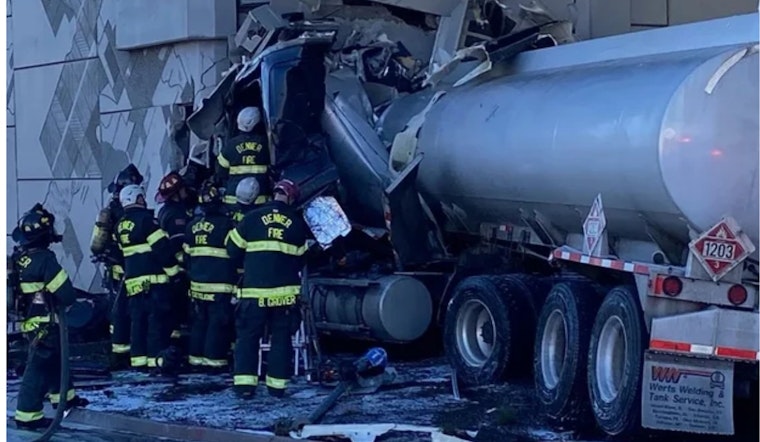
A deadly Thanksgiving morning crash that shut down East Yale Avenue and rattled I-25 traffic now comes with a sobering postscript: the gasoline tanker driver who slammed into a light-rail abutment had both alcohol and methamphetamine in his system, according to an autopsy released Wednesday.
Rickey Swaniger, 56, of Sterling, died on impact when the tanker sped down an I-25 off-ramp and plowed into the concrete support, authorities said. Crews spent hours cutting through the crushed cab to reach his body, and roughly 2,000 gallons of fuel leaked onto the roadway, but, in a bit of luck amid the chaos, did not ignite.
According to an autopsy report obtained by CBS News Colorado, the Denver Medical Examiner listed Swaniger's cause of death as multiple blunt-force injuries and the manner of death as accidental. Toxicology testing recorded 120 milligrams per 100 grams of alcohol in his liver and 110 nanograms per gram of methamphetamine in liver tissue.
As reported by Denver7, the single-vehicle wreck tore down traffic lights and narrowly missed vehicles stopped on the ramp, forcing extended road closures and transit detours. Swaniger was the only person in the truck, and police publicly identified him in early December as they continued to investigate why the tanker left the off-ramp.
Cleanup and transit disruption
Fire crews deployed retention devices to keep spilled fuel from reaching storm drains after the tanker’s four compartments released roughly 2,000 gallons. Only one compartment actually ruptured, according to CBS News Colorado, but that was enough to trigger a lengthy hazardous-materials response.
RTD shut down E-Line service and rolled out shuttle buses around the crash zone while engineers checked the stability of the overpass, CBS News Colorado reported. Structural repairs wrapped up on Dec. 23, and non-critical cosmetic work was finished by Jan. 20.
What investigators will look at
Toxicology numbers on their own do not prove a driver was impaired at the wheel, but they are a key part of how investigators piece together serious crashes and try to understand what went wrong. A review of fatal-crash toxicology shows that alcohol and stimulants show up regularly in drivers killed on the road, which is why officials consider medical examiner findings alongside skid marks, witness statements, and other scene evidence, per science.gov.
Hoodline first covered the Thanksgiving incident, and our earlier piece, Fatal Fuel Tanker Crash, detailed the initial shutdown and cleanup efforts. The autopsy report adds another layer to the case that local authorities are still actively reviewing.





