

























































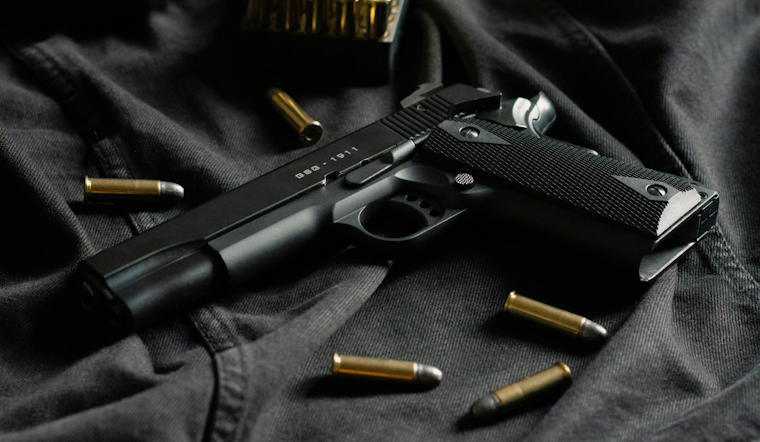
The federal firearms chief in Detroit says his agents are cranking up federal gun prosecutions by digging through social media and zeroing in on tiny conversion parts that can turn pistols into machine guns, known as "switches." Special Agent in Charge James Deir said the Detroit Field Division has moved away from simply adding more "boots on the ground" and is instead focused on sharply increasing the number of federal cases it helps bring. "You pull the trigger, accountability is coming your way," he told reporters.
Deir described an intelligence-driven strategy that reaches beyond Detroit into Lansing, Flint, Grand Rapids, Kalamazoo and Jackson, and said that approach has produced what he called an exponential rise in federal case filings. In a wide-ranging interview with a local outlet, he said the ATF reviewed a large volume of cases last year for possible federal prosecution and is embedded with local detectives on homicide and domestic-violence investigations. According to Metro Detroit News, the Field Division’s model pairs federal tools with local partnerships.
Social posts as evidence
Investigators are increasingly treating selfies, videos, and threatening posts as workable leads instead of empty bravado. If a gun is visible, if a serial number flashes on screen, or if a geotag gives away a location, agents say those details can help trace where a weapon was bought and how it moved. ATF officials say some social platforms now openly glorify conversion devices and gun use, and agents monitor those posts for active threats and investigative clues.
Local coverage has documented the surge in online flexing and how officials say it is feeding federal gun probes, according to FOX 2 Detroit.
Switches: tiny parts, outsized danger
High on the ATF’s list are the small conversion devices known as switches, which can make a semi-automatic pistol fire continuously. Federal agents and prosecutors say those parts have become far more common and are showing up in more cases. Michigan prosecutions have included seizures and indictments linked to the distribution and importation of switches, underscoring how quickly something that fits in a pocket can multiply the damage from a single handgun.
Trials and sentences have followed large-scale distribution schemes involving these devices, as detailed by the ATF.
What the federal penalties look like
Under federal law, conversion devices are treated as machineguns, and possession of an unregistered device can bring serious prison time. Authorities commonly cite penalties of up to 10 years in federal prison for possession alone. Prosecutors say using a switch during a violent crime can trigger much harsher sentences, including life in prison where specific statutes apply.
Many states have moved to mirror those federal prohibitions. At least half of U.S. states now outlaw such devices and have worked to close gaps between state and federal enforcement, according to AP News.
Deir told reporters that federal tools can matter most when state prosecutions stall, especially in cases where witness cooperation is limited or where shootings are nonfatal but still highly dangerous. He said federal restrictions and charges can reach traffickers or prohibited possessors whom local courts may not be able to hold. He also highlighted the federal detention process as a key difference, noting that judges can keep a defendant in custody before trial if prosecutors demonstrate the person is a danger or a flight risk.
The goal, he said, is to identify repeat offenders, build stronger cases, and keep violent offenders off the streets, as reported by Metro Detroit News.





