

























































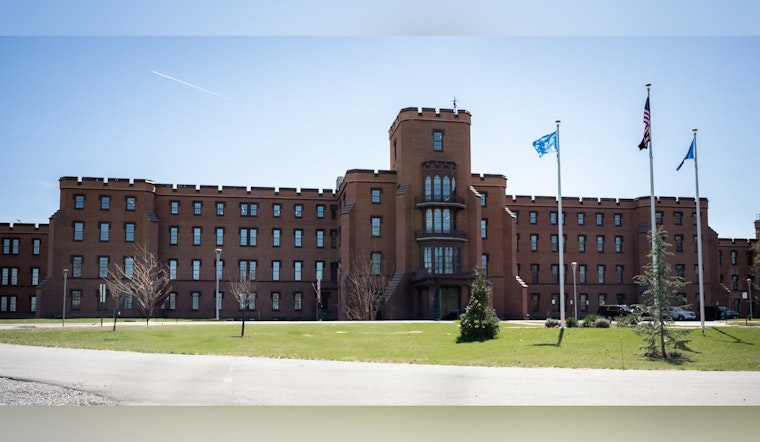
Employees at the Department of Homeland Security's St. Elizabeths West Campus say demolition crews are stirring up asbestos-laced dust that drifts into occupied offices, even as managers decline to offer masks, share air-testing results, or expand remote-work options. Staff describe abatement teams in full protective suits working just yards away, while office workers in regular clothes are told to keep business as usual. The accounts land squarely in the middle of Secretary Kristi Noem's emergency push to knock down long-vacant historic buildings across the 176-acre campus.
Those accounts were outlined in reporting by Payday Report, which republished original reporting from Migrant Insider. Employees told those outlets that warning signs are scarce, internal notices about the construction did not mention asbestos at all, and one aide summed up the agency's stance as, "They basically just said 'Good luck.'"
In a Dec. 19 memo, Secretary Noem invoked emergency authority and asked the General Services Administration to demolish more than a dozen century-old buildings on the West Campus, arguing they "constitute a present risk to life and property." Preservationists say that maneuver effectively sidesteps normal review procedures. An engineering assessment prepared for GSA reportedly found that most of the buildings targeted for demolition were generally stable and repairable, which has only intensified the debate over whether razing them is truly necessary. The Washington Post reviewed both the memo and the engineering report.
Federal oversight records show that asbestos management at St. Elizabeths has been a sore spot for years. A 2024 audit by the GSA Office of Inspector General found that GSA failed to properly identify and mitigate asbestos in Building 40 and did not adequately notify people who worked there. OSHA's construction asbestos standard requires clearly marked regulated areas, air monitoring, and specific respirators during demolition and abatement, and employers on multi-employer sites must take steps to protect workers in nearby spaces, not just those inside containment. Reports from the GSA OIG and OSHA spell out those requirements.
DHS officials have framed the emergency demolition as a security project intended to eliminate "blind spots" near critical operations. WTOP quoted DHS assistant secretary Tricia McLaughlin saying the move is about safety, and GSA told reporters it is complying with "all applicable laws and regulations." The Washington Post reviewed those agency comments.
Worker Safety And Legal Rules
Under OSHA regulations, contractors who remove asbestos are required to establish regulated areas, monitor the air, and provide appropriate respirators for workers inside the abatement zone. Employers with staff in adjacent offices are supposed to either relocate those employees or verify that asbestos is fully contained and that exposure limits are not being exceeded. The 2024 GSA OIG audit urged GSA to improve record keeping, employee training, and notifications to building occupants, recommendations that critics say have yet to show up in day-to-day practice at St. Elizabeths. The standards and findings are laid out in detail in OSHA rules and the GSA OIG audit.
Preservationists Want A Pause
Historic preservation groups, including the National Trust for Historic Preservation and the D.C. Preservation League, have pushed back on the demolition plan. They have called Noem's emergency filing "problematic" and are urging a thorough on-site review before any more buildings come down. The Boston Globe reported that critics say a compressed holiday notice period made meaningful public oversight nearly impossible.
Workers say they want straightforward air-testing results, clearer warning signs, and the option to work remotely while abatement is in progress. Preservation and oversight advocates say the same level of transparency is overdue for the broader campus plan. Together, the workers' accounts and the 2024 GSA OIG audit have fueled renewed calls for independent monitoring and a public explanation of how agencies intend to protect both employees and the landmark St. Elizabeths site. Migrant Insider detailed many of the employees' allegations.





