

























































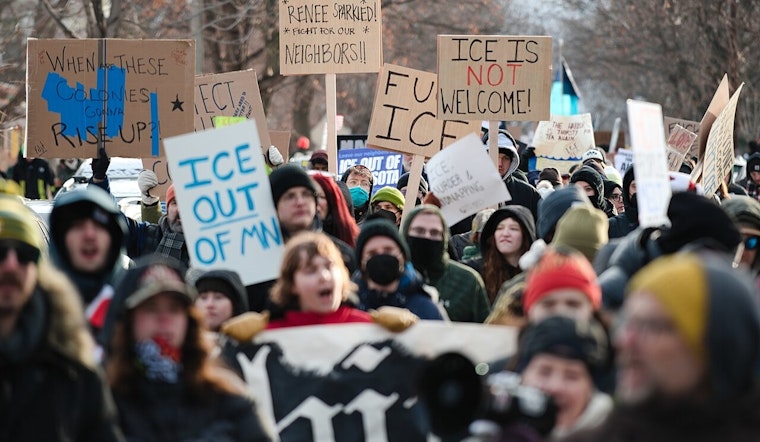
The fight over federal immigration enforcement in Minneapolis has officially reached the hotel bar. On Tuesday, a Minneapolis City Council committee voted to put liquor license renewals for two downtown hotels on hold after protesters accused the properties of hosting federal immigration agents during the state’s recent enforcement surge.
By a vote of 8-5, the committee paused renewal for the Canopy by Hilton in the Mill District and the Depot Renaissance Hotel and set a public hearing for Feb. 17. City licensing staff told council members that, in the meantime, both hotels can keep serving alcohol until the full council makes a final decision. The move comes after several nights of loud demonstrations outside the properties and a tense split among council members over how far the city should go in responding to the protests.
As reported by the Star Tribune, the committee, which includes all council members, opted for the delay so residents could weigh in publicly. Amy Lingo, the city’s business licenses manager, told officials that under existing liquor rules the hotels remain eligible and that there is no current regulatory basis for denial. City attorney Quinn O’Reilly added that staff had found no legal grounds to reject the renewals without concrete evidence of violations. Several council members who opposed the delay warned that punishing hotels based on who they rent rooms to could expose the city to lawsuits.
Operation Metro Surge and the Backlash
The hotels were pulled into the political spotlight after the federal "Operation Metro Surge" sent a large influx of Department of Homeland Security officers into Minnesota, sparking protests and a wave of legal action. According to a press release from the Minnesota Attorney General’s Office, the state and the cities of Minneapolis and Saint Paul have sued the Department of Homeland Security over the surge and its effects on local communities.
The legal filings describe thousands of federal officers deployed in the Twin Cities, arguing that the operation has strained local services and fueled sustained public opposition. The hotel protests became a visible symbol of that resistance, as demonstrators targeted locations believed to be housing immigration agents.
Council Split and Protesters’ Claims
Committee Chair Aurin Chowdhury said she wanted more time for public testimony, pointing to constituents who say their daily lives near campus have been disrupted by the surge and the protests that followed. Council Vice President Jamal Osman defended demonstrators as residents standing up for immigrants, while colleagues who opposed delaying the renewals stressed that the city should not use its liquor licensing power to punish businesses without evidence of actual violations.
The Star Tribune also reported that about 1,000 people gathered outside the two hotels on Jan. 9 and that protesters caused roughly $6,000 in damage to the Depot Renaissance. Those numbers were cited by council members who warned that the standoff is already hurting local businesses and could get worse if the city appears to be encouraging a boycott through its licensing decisions.
What Comes Next
The Feb. 17 public hearing is expected to serve as a pressure valve and a fact-finding mission. Neighbors, hotel representatives and anyone else with a stake in the fight will have a formal chance to testify, while city staff lay out whatever they have documented so far.
Local reporting has indicated the federal operation brought roughly 3,000 immigration officers into the area and has driven up Minneapolis police overtime and related costs, highlighting how a federal deployment can become a local budget problem. For now, licensing officials continue to say the hotels meet all liquor law requirements. Without documented violations, city attorneys and several council members have signaled that revoking or denying licenses would be legally risky and that the upcoming hearing is intended to build a factual record before any final call is made.





