

























































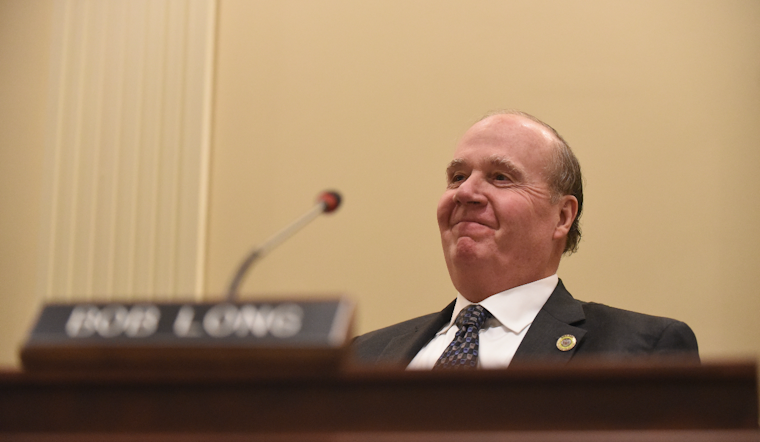
Delegate Bob Long, the Dundalk Republican representing parts of southeast Baltimore County, is lining up with House Republicans behind a package of bills in Annapolis that would tighten in-person voting rules and add new citizenship checks. One bill would require voters to show photo identification at the polls; another would sign Maryland up for a federal database to verify citizenship. The measures drew hearings Wednesday and have reignited a familiar fight over how far the state should go in the name of election security versus ballot access.
What HB 462 would require
According to LegiScan, House Bill 462 would instruct an election judge to confirm a voter’s identity by asking for a valid government-issued photo ID, or a valid non-government photo ID paired with a current utility bill, bank statement or similar document showing the voter’s name and address. Anyone who cannot produce those documents at the polling place would still be allowed to cast a provisional ballot, and the bill would make it illegal to knowingly vote under a false form of identification.
Citizenship checks via SAVE
A companion proposal, House Bill 454, would require the State Administrator of Elections to enroll Maryland in the federal Systematic Alien Verification for Entitlements, or SAVE, program so the State Board of Elections could verify U.S. citizenship for people registering to vote. Supporters argue the program is already in use by state agencies and that the federal government has made the service available to states. Opponents counter it could trigger false positives and add red tape to election administration, according to reporting by CBS Baltimore.
Long's pitch in Annapolis
Dundalk Eagle reported that Long framed the bills as an effort to shore up public confidence in elections. He told lawmakers, voting is one of the most precious rights we have, and said officials need to be sure the person voting is who they say they are. He presented HB 462 to the House as part of the House Republican caucus’ accountability agenda.
Critics raise access concerns
Voting-rights advocates and Democratic lawmakers say the push for stricter ID rules and added citizenship checks risks sidelining some of the very people elections are supposed to serve, including seniors, low-income residents and those with disabilities. “Restrictive voter suppression policies like voter ID only make it harder for eligible Maryland voters to access the ballot box,” Common Cause Maryland’s executive director said, as reported by CBS Baltimore. Nationally, the National Conference of State Legislatures notes that 36 states either request or require some form of ID at the polls (NCSL).
What happens next
Both bills were sent to the House Government, Labor and Elections Committee, which had hearings scheduled yesterday. The committee’s decision will determine whether either measure gets a vote on the House floor. The Maryland General Assembly’s bill page for HB 454 labels that measure as an emergency bill that would take effect as soon as it is enacted, so committee action will dictate not just whether it moves, but how quickly it could kick in.
How voters can check their status
The State Board of Elections and local boards provide guidance on what counts as acceptable ID and how provisional ballots work for people who show up without standard documents. Voters can review acceptable forms of ID and confirm their registration status on the Maryland State Board of Elections website.





.jpg)