

























































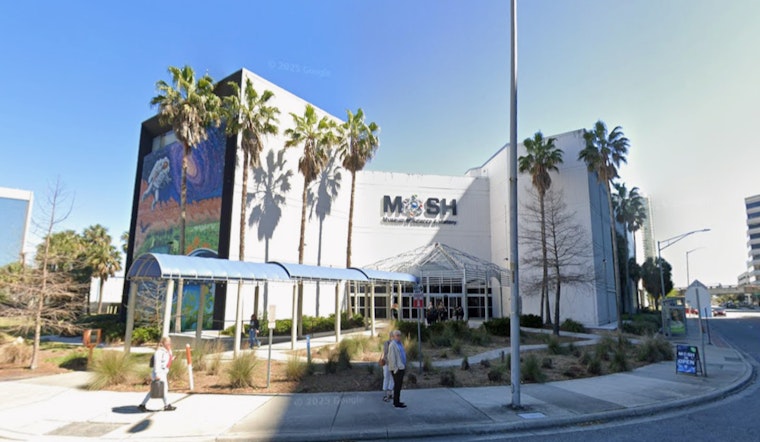
Two Northeast Florida museums have landed on opposite sides of a Tallahassee tug-of-war, with key state dollars for both suddenly up in the air. The Senate’s spending plan backs the long-planned Florida Museum of Black History in West Augustine, while the House budget puts its weight behind the Museum of Science & History’s (MOSH) move to the Northbank riverfront. Unless lawmakers close the gap, both marquee projects could be staring down delays.
According to Action News Jax, the House and Senate budgets are about $1.4 billion apart overall, and each chamber is pushing at least a million dollars toward one museum, but not the other. The Senate’s proposal includes roughly $1 million for the Florida Museum of Black History. The House, meanwhile, earmarks about $1.25 million for MOSH’s Genesis project tied to its planned north-bank relocation.
Florida House records show MOSH asked lawmakers for $2.5 million and notes that the City has already committed $50 million, with the museum’s capital campaign bringing in roughly $95 million so far. In the Legislature’s draft budget text, however, MOSH’s Genesis project appears in the cultural facilities line item for just $1.25 million, a noticeable gap between the formal request and the tentative allocation.
Why the split matters
That gap is not just a spreadsheet problem. Organizers for both museums say state backing is a signal that helps unlock private money and green-light final design and construction work. Howard Holley, board chair of the Foundation for the Museum of Black History, told Action News Jax that many private funders are holding off while the House has yet to take up a bill that would officially designate West Augustine as the museum’s future home.
MOSH’s funding gap and what is at stake
MOSH leaders and city officials have warned that construction estimates have climbed into the low hundreds of millions of dollars, and that design tweaks are on the table to close the gap. One recent idea, local reporting has detailed, is to shrink on-site parking to save an estimated $5 million. The museum’s House appropriations form lays out the city’s $50 million pledge and the roughly $95 million already raised, and the mismatch between campaign asks and draft budget line items makes it tougher to lock in final design work, contractor bids, and private donations.
For now, both projects sit in limbo while lawmakers hammer out a final spending plan in Tallahassee. Organizers on both sides say that whatever emerges from the Capitol will shape more than a building’s footprint; it will determine whether Northeast Florida can lock down the private investment and long-term stability these cultural anchors need to move from glossy renderings to reality.





