

























































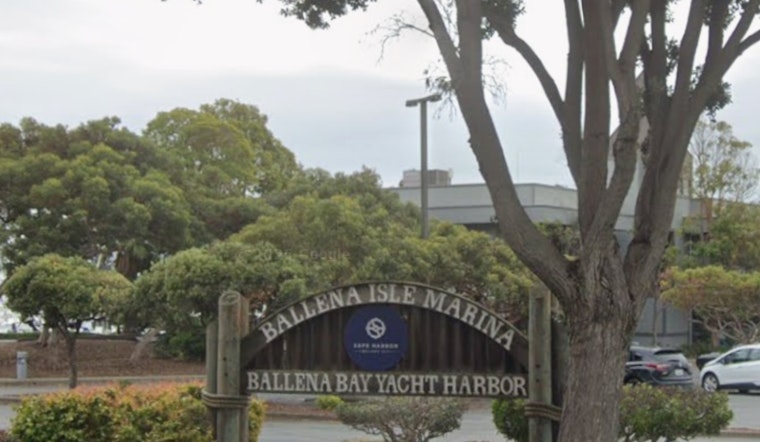
A former officer at Alameda’s Ballena Bay Yacht Club is at the center of a high-dollar fraud case, after prosecutors say he quietly steered more than $200,000 in federal pandemic aid into his own pocket and personal projects.
Nicholas Stellato, 53, a onetime rear commodore at the private club, has been charged in Alameda County with allegedly securing a $224,276 federal restaurant relief grant under false pretenses, then using large chunks of it on himself instead of the club. According to court filings, the money flowed into businesses he controlled and was later drained through withdrawals and purchases that did not benefit the yacht club. Stellato is currently out of custody while the case moves through the courts.
As reported by The Mercury News, Stellato faces charges that include money laundering, grand theft, and making a false statement on a financial form. A preliminary hearing is set for Feb. 27. Prosecutors say the case hinges on a Restaurant Revitalization Fund award that hit the club’s account in May 2021, and court documents reviewed by the paper spell out how the money allegedly moved and where it ended up.
How the Club Landed Federal Restaurant Aid
Ballena Bay Yacht Club appears on a July 2021 list of Alameda recipients that shows a $224,276.43 Restaurant Revitalization Fund award tied to the club, according to Alameda Patch. Under the federal rules laid out by the SBA, the program was designed for restaurants, bars, and similar food-service businesses, with specific eligibility criteria and restrictions on how the money could be spent.
The yacht club, however, is registered as a 501(c)(7) social and recreational organization, according to ProPublica. That nonprofit designation, typically used for social clubs rather than commercial restaurants, raised questions about how the organization qualified for the Restaurant Revitalization Fund in the first place.
What Prosecutors Allege
Prosecutors say Stellato used false information in a May 2021 application for federal aid, then moved roughly $175,000 from the resulting grant into an internet services company he controlled. From there, according to court filings, about $82,674 was spent on personal expenses, including cash withdrawals, travel, restaurant charges, and the purchase of a Jeep.
The court documents also state that club members had removed Stellato from the rear commodore role in 2019 over suspected embezzlement of about $20,000, only to reinstate him to the board in 2021 shortly before the Restaurant Revitalization Fund payment was made. After concerns resurfaced, the yacht club’s CEO reported the matter to police, and a club spokesperson declined to comment on pending litigation, according to The Mercury News.
Bigger Picture
The Stellato case fits into a broader pattern that has been emerging since the earliest months of the pandemic, when the federal government pushed out relief funds at record speed. Oversight reports and prosecutions have repeatedly shown that the Restaurant Revitalization Fund, like several other COVID relief efforts, was susceptible to inflated claims and outright fraud.
A Government Accountability Office review flagged the challenges of verifying eligibility while disbursing emergency aid so quickly, and U.S. attorney offices around the country have pursued an array of criminal cases and civil settlements involving alleged misrepresentations on RRF and other COVID relief applications. Together, those actions highlight a simple problem: once billions in emergency cash are out the door, chasing down questionable applications becomes a lot harder.
Legal Outlook
The allegations against Stellato remain unproven, and prosecutors will have to back them up in court. If a judge allows the case to proceed and Stellato is ultimately convicted, the potential penalties are significant. Federal money-laundering statutes can carry prison terms of up to 20 years and substantial fines, as outlined by the Legal Information Institute, and California’s grand theft law is codified in California Legislative Information under Penal Code section 487.
For now, all eyes are on the Feb. 27, 2026 preliminary hearing, where a judge will decide whether there is enough evidence for the case to move toward trial and potentially turn a yacht club funding controversy into a full-fledged criminal courtroom drama.





