

























































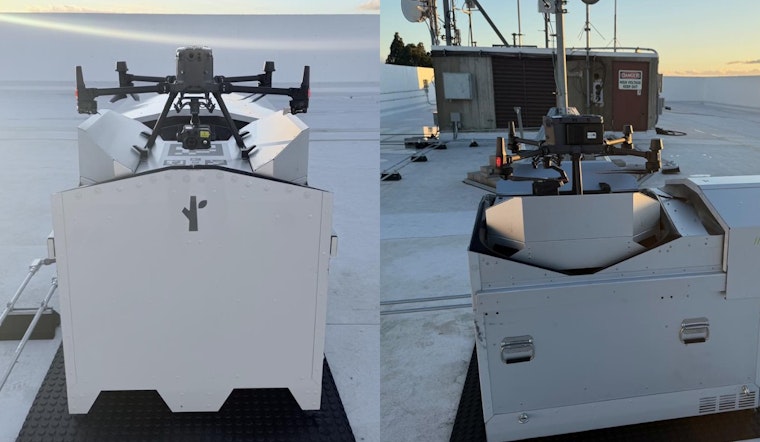
Fairfield police say residents will soon see more than patrol cars racing to emergency calls. Yesterday, the department announced it is launching a Drone as First Responder program and building a Real-Time Intelligence Center that will stream aerial video directly to officers in the field.
According to the department, these drones are designed to get off the ground in under a minute and respond only to defined public-safety incidents, not to hover over neighborhoods for routine monitoring. Officials also say a public transparency portal is coming in the next few weeks, promising online access to flight histories, routes, and the calls for service that trigger each launch.
How the program will work
Officials say the Drone as First Responder aircraft will beam live footage into a planned Real-Time Intelligence Center so responders can see what is happening before they arrive on scene. The department notes that a training team is already preparing to implement the program.
The drones are slated to support active incidents, help verify whether calls for service are valid, and assist with searches or rescues. Police emphasize that operations will comply with state and federal law, with procedures that emphasize privacy protections and oversight requirements.
Those details come from the department’s announcement on the Fairfield Police Department.
How this fits a growing trend
Fairfield is joining a growing list of California agencies rolling out Drone as First Responder systems that give dispatchers and supervisors a quick aerial look at unfolding incidents and help them allocate resources more safely.
Coverage of similar launches has noted that departments typically plug drones into real-time data centers and work with the Federal Aviation Administration to secure permission to fly beyond visual line of sight while they test safety protocols. The goal is to improve officer and public safety and cut response times, even as agencies juggle technical, legal, and operational tradeoffs.
That context has been reported by Police1.
Privacy and oversight
Not everyone has been thrilled about first-responder drone programs in other cities. Privacy advocates have warned that, without strict rules, what starts as a targeted response can slide into broader surveillance.
In Bridgeport, for example, critics, including the ACLU, raised alarms about potential “mission creep” and pressed for clear limits on data retention, independent oversight, and meaningful community input during the rollout. Similar debates have followed many recent Drone as First Responder deployments and helped shape how local governments write policy for the technology.
Those concerns have been documented by CT Public.
What residents should expect
Fairfield police have told community members they may notice drones in the air during incidents or training. The department stresses that the aircraft are meant to back up officers on the ground, not replace them.
The City of Fairfield’s police website directs residents to the department’s transparency portal and related policy documents for more details on how the system is supposed to work and how it will be monitored. Those materials are available through the City of Fairfield Police Department.
Legal and accountability
Beyond local policy choices, agencies that use drones typically need FAA waivers to fly beyond visual line of sight and must set technical limits on how footage is stored, encrypted, and accessed. Reporting on Drone as First Responder programs has pointed out that these regulatory and technical decisions can determine how quickly programs expand and what retention and oversight rules look like in practice.
Industry coverage, including reporting from Police1, notes that departments are still working through those hurdles as new capabilities come online.
For now, Fairfield residents who want to follow along can check the department’s online post and the upcoming transparency portal for flight histories, policies, and daily logs. Police have invited questions through their official channels as the program and its oversight structure take shape.





