

























































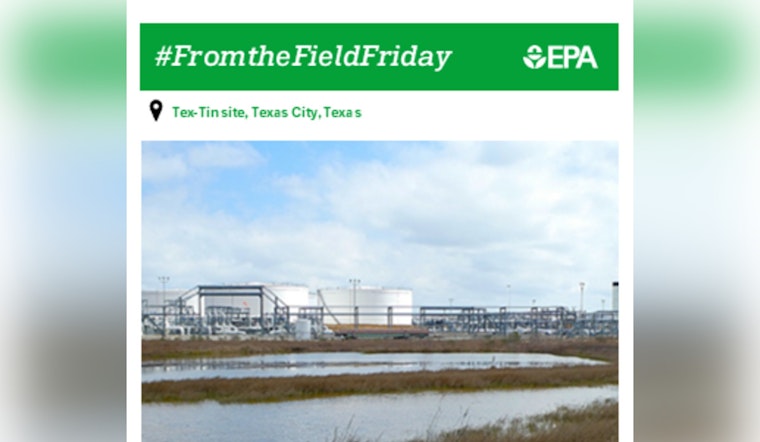
Federal environmental regulators are once again throwing their weight behind redevelopment at the former Tex‑Tin Superfund site in Texas City, saying the long‑troubled property could plug directly into the region’s booming energy network. EPA Region 6 signaled that it is on board with new industrial uses, as long as every rail tie, pipeline trench and temporary laydown yard is planned around the cleanup protections that still guard the site. Early concepts on the table include a new rail spur, pipeline connections and short‑term uses that would let the land support energy and terminal activity while ongoing monitoring continues in the background.
EPA and State Regulators Coordinate Reuse
In a message reshared by the Texas Commission on Environmental Quality, EPA Region 6 said it is working with state regulators and the Texas City Terminal Railway Company to “move forward safely” on redevelopment while keeping the cleanup remedy intact. Today's post casts the agency’s role as a technical watchdog, making sure construction crews and rail work follow long‑term land use controls instead of accidentally undoing them. Local railroad and terminal interests are listed as partners in that coordination effort.
From Smelter to Terminal, With a Long Cleanup in Between
The Tex‑Tin property was home to tin and copper smelting for decades before it landed on the federal Superfund list, with cleanup focused on contaminated soil, sediment and groundwater so parts of the site could return to industrial duty. Federal and state teams signed off on a Ready for Reuse determination for a portion of the land in 2003, clearing a path for carefully managed development. The EPA later singled out the site for excellence in reuse after a mid‑2010s wave of investment turned part of the property into a bulk oil terminal. That project, anchored by a long‑term lease signed in 2015 and a terminal that opened in 2017, helped pull in more money and activity to the immediate area, according to the EPA.
Rail Spur Plans and Continued Oversight
The agency’s official site profile notes that current owner Texas City Terminal Railway Co. “is currently working to install a rail spur on the property by the end of 2025,” according to the EPA. That timeline helps explain why officials are stressing coordination on pipelines, temporary staging areas and any new construction, all of which have to match up with the existing engineering controls and legal restrictions on the land. Because the rail schedule stretches through late 2025, public officials and watchdog groups are expected to keep an eye on records that show the cleanup systems survived any new dirt‑moving intact.
Legal and Environmental Safeguards
The property is still wrapped in engineered barriers, institutional controls and long‑term environmental monitoring that regulators insist must stay in place as redevelopment moves forward. The Texas Commission on Environmental Quality continues to list Tex‑Tin among Galveston County Superfund sites and is named as a partner in oversight work that includes groundwater operation and maintenance, according to the state Superfund index. Any developer or operator that steps onto the land will be expected to follow those conditions and coordinate closely with federal and state project managers as plans advance.
What This Could Mean for Texas City
Supporters of the redevelopment push say the mix of terminal space, rail access and potential pipeline links could help Texas City reel in more freight and energy jobs without clearing new greenfield tracts along the Gulf Coast. Cleanup coordinators point to the site’s design‑build remediation strategy, which they say sped up work and cut costs, and the consultant Verdantas highlights Tex‑Tin as a showcase for tying cleanup and reuse planning together from the start. Local officials and port operators will now be watching the paper trail, from permits to final reports, to see whether new construction truly protects the remedy while adding capacity and jobs to the broader port complex.





