

























































The National Park Service is putting some of the Memphis area's darkest history under the federal microscope, launching a congressionally directed special resource study of lynching sites in the city and within a 100-mile radius. Eight recorded lynching incidents are now under formal federal review. The study opens a public comment window and will include a virtual webinar on Feb. 27, along with in-person meetings from March 3 to 5, to explain how the agency will decide whether any of these sites should be recommended for inclusion in the National Park System.
Local coverage first caught the move on Feb. 2, when the Memphis Flyer outlined the National Park Service schedule and timeline. Community researchers and historians, including the Lynching Sites Project of Memphis, have spent years documenting these locations and pushing for a federal study and formal recognition.
Sites Named In The Study
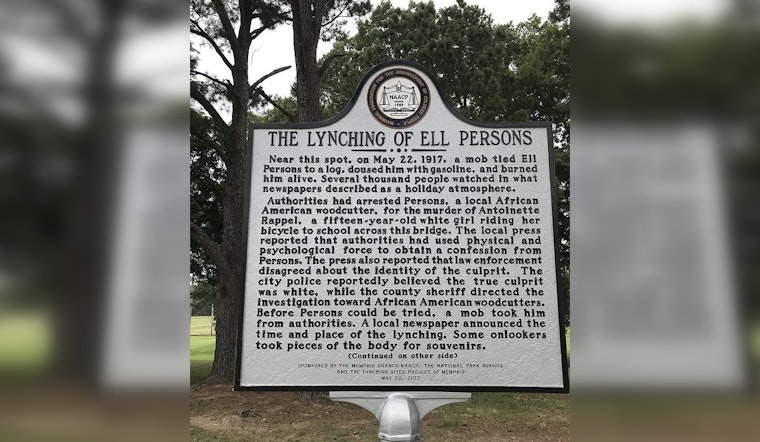
Congress identified eight lynchings for review. They range from the 1868 killings of Christopher Bender and Bud Whitfield and the 1869 death of Wash Henley, to the 1892 People’s Grocery lynchings of Thomas Moss, Will Stewart, and Calvin McDowell. Also on the list are the 1893 killing of Lee Walker, the 1894 Kerrville group lynching, the 1917 lynching of Ell Persons, the 1939 killing of Jesse Lee Bond in Arlington, and the 1940 killing of Elbert Williams in Brownsville. The legislation that set this in motion, H.R. 7912, is available on Congress.gov.
How The NPS Will Proceed
The National Park Service says it will test each candidate site against four statutory criteria: national significance, suitability, feasibility, and the need for direct NPS management. Any location that fails one of those tests can be dropped from consideration. The agency has scheduled a virtual webinar for Feb. 27 at 11:30 a.m. Central, with in-person meetings set for March 3 in Oxford, March 4 at Rhodes College in Memphis, and March 5 in Brownsville. Written comments will be accepted through Apr. 3, 202,6 via the National Park Service.
Local Memory And The Ell Persons Case
One of the most thoroughly documented cases in the study, the 1917 lynching of Ell Persons, was added to Tennessee’s list of historic places in August 2024 and remains a central focus for local researchers. The Tennessee Historical Commission notes that the Persons lynching drew national outrage at the time and says the site today “remains undeveloped and is a potent reminder” of racial terror in Memphis.
Possible Outcomes And Oversight
By law, the study team has three years to complete its work and deliver a report to Congress. Any outcome, whether it is a new park unit, an interpretive site, historical markers, or a decision to take no action, would still need approval from lawmakers. As the Department of the Interior told a House subcommittee in 2022, “The Department supports the goal of increasing public understanding of the history of lynching and other incidents of racial violence against Black communities,” language that underscores the stakes of this review.
Whatever the study ultimately recommends, descendants, historians, and local advocates say that federal attention helps elevate sites that have long been ignored and creates an opportunity to protect them. The public comment period runs through Apr. 3, 2026, and the National Park Service plans to post recordings of the meetings for people who cannot attend in person.





