

























































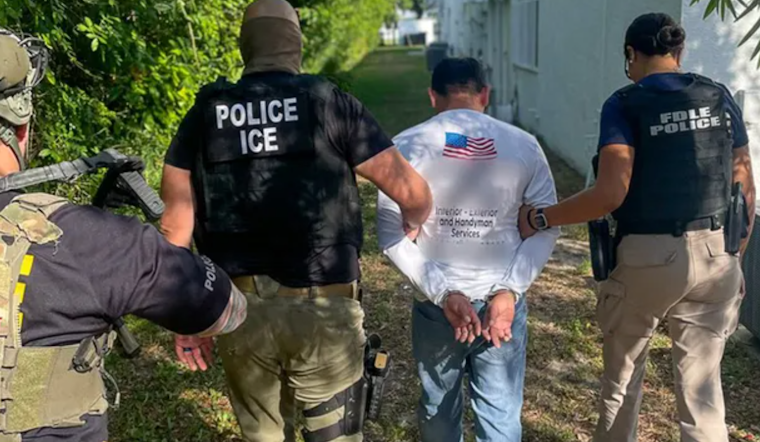
Florida officials rolled into Daytona Beach yesterday with more than $1.7 million in checks for local law enforcement, cutting in agencies across Volusia and Flagler counties as part of a statewide push to ramp up immigration enforcement. The money is set up as reimbursement for departments that partner with federal immigration authorities under the 287(g) framework, covering administrative and operational costs tied to holding and processing detainees in local jails.
According to the Tampa Free Press, the Flagler County Sheriff’s Office walked away with the biggest share at more than $725,000. Volusia County Corrections and the Volusia Sheriff’s Office also landed sizable portions, while smaller agencies, including the Holly Hill and Daytona Beach Shores police departments, received checks at the Daytona Beach event led by Florida Chief Financial Officer Blaise Ingoglia.
Ingoglia cast the awards as a direct response to what he called a border-policy “crisis,” arguing the funding is "not only an investment in our officers, but it is also an investment in our community’s safety," according to a press release from the Florida Department of Financial Services. The payments were routed through the State Board of Immigration Enforcement as reimbursements for departments that take part in 287(g) agreements.
How the program works
The 287(g) model trains and authorizes local officers to assist U.S. Immigration and Customs Enforcement, essentially deputizing them for immigration work in addition to regular policing. The state board’s reimbursements are intended to offset the extra costs those joint operations generate.
Those coordinated efforts, including multi-county sweeps that state officials have branded with names such as "Operation Tidal Wave," have resulted in thousands of arrests in recent months, according to reporting by the Associated Press, which has been tracking Florida’s growing role in immigration enforcement.
Where the money is expected to go
State officials say the checks are largely intended to reimburse administrative and operational expenses such as detention beds, transport and overtime that local agencies rack up while handling immigration-related cases.
An analysis of county requests submitted to the State Board of Immigration Enforcement shows jurisdictions asking for items that range from Rapid ID fingerprint scanners and ICE bed space to AI software for body‑worn cameras, transportation support and bonuses for 287(g)-trained officers, according to the Tallahassee Democrat.
Local reaction and civil-rights concerns
Sheriffs who appeared at the Daytona Beach presentation said the money will help keep what they described as "criminal illegal aliens" out of their communities and give deputies more resources to back up federal agents, the Tampa Free Press reported.
Civil-rights groups and some legal experts, however, warn that expanding immigration duties for local police can discourage immigrant victims and witnesses from coming forward. Similar operations in the past have led to mistaken detentions, concerns that have been documented by the Associated Press.
Legal and oversight questions
State legislation and follow-up rules from the board spell out which agencies are eligible for reimbursements and under what conditions bonuses tied to participation in federal operations can be paid. The bill language and amendments that authorized the State Board of Immigration Enforcement to make reimbursements and placed limits on bonus payments are available in the legislative record for public review via LegiScan. Board minutes and invoices will offer residents the clearest window into how the cash is ultimately spent.
More rounds of reimbursements are expected. Ingoglia’s office and the state board have issued similar awards to other counties in recent months, and local officials say additional applications are still pending. Reporters will be watching for detailed spending breakdowns from Volusia and Flagler that show whether the money lands in equipment purchases, detention capacity, overtime or officer bonuses.





