

























































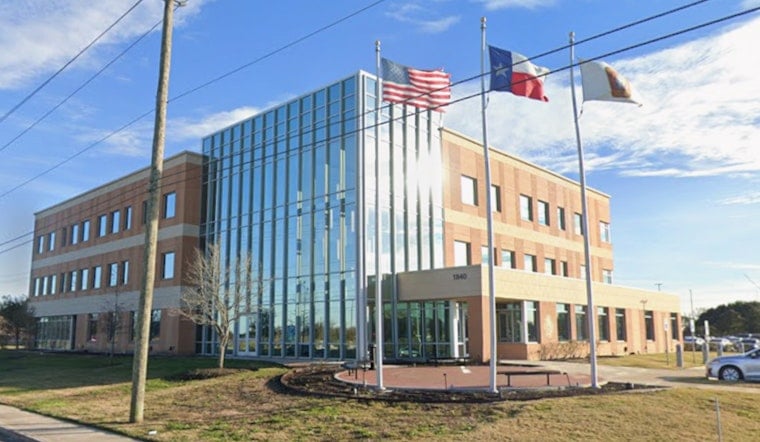
Black drivers in Fort Bend County were pulled over by sheriff’s deputies at nearly twice the rate of white drivers in 2025, according to the county's own traffic-stop figures. The sheriff’s office logged 12,816 motor-vehicle stops last year, and who was being stopped and searched has quickly become a flashpoint for residents and local officials. Searches and other enforcement actions were concentrated among Black motorists, and the department's filing notes that deputies generally did not record a driver’s race until after the stop had already begun. The data were posted to county records this week and are now part of the public record.
What the sheriff's report found
According to the Fort Bend County Sheriff's Office, deputies documented 12,816 traffic stops in 2025 and recorded the race or ethnicity of drivers in most encounters. The filing shows Black drivers were the subject of 5,018 stops, about 39 percent of the total, while white drivers were recorded in 2,203 stops, about 17 percent, with Hispanic and Asian drivers making up the rest. The report lists 380 searches overall. Black drivers were involved in 166 of those searches, roughly 43.6 percent, even though deputies reported they did not know a driver’s race prior to the stop in 12,552 encounters. The submission also records zero racial-profiling complaints in 2025 and notes four stops where physical force resulted in bodily injury.
How that compares to the county
Fort Bend County is one of the Houston region’s fastest-growing and most diverse counties, and its population mix does not line up neatly with the stop totals. Per the U.S. Census, non-Hispanic white residents represent roughly 29 to 30 percent of the county, while Black residents are about 21 to 23 percent, Asians about 22 percent and Hispanic or Latino residents roughly 24 to 25 percent. The gap between those figures and the stop totals, especially Black drivers making up a larger share of stops than of the population, is helping fuel calls for closer public review.
Where the data landed
The sheriff’s full report was filed as part of the public agenda packet for the Feb. 26 Commissioners Court meeting and is posted in the county’s online docket. The agenda materials bundle the sheriff's 2025 traffic-stop report with comparative numbers from constables and other local agencies. In the packet, the sheriff’s office outlines its written policy on racial profiling and provides the raw stop, search and use-of-force counts that are required under state law.
Sheriff responds
Sheriff Eric Fagan has pushed back on suggestions of wrongdoing, telling Houston Public Media that deputies are "doing our job" and urging people to factor in where and why stops take place across a rapidly growing county. His office has framed the report as straight compliance with state reporting rules, saying it is providing the numbers for public review rather than offering an in-house explanation for them. Community leaders and reporters say the raw figures will now be combed for patterns and potential explanations.
How this fits a national pattern
Researchers and civil-rights groups say the Fort Bend numbers fit a broader national pattern of unequal traffic enforcement. A large multi-jurisdiction study led by Stanford researchers found that Black drivers are stopped and searched at higher rates than white drivers in many agencies, even when factors like location and time of day are taken into account. Texas law requires every law-enforcement agency to submit annual racial-profiling data to the Texas Commission on Law Enforcement, which aggregates those filings and makes them available for comparison and oversight across departments.
What comes next
With the report now on file, local officials, advocates and residents have the raw material to push for follow-up briefings, audits or policy changes if they decide to use it. Similar findings elsewhere in the region have already prompted reforms. In Houston, for example, the police department rescinded a directive that encouraged officers to make at least one traffic stop per shift after critics argued that quotas were feeding disparities in enforcement. Fort Bend commissioners and community groups will determine in coming meetings how aggressively to scrutinize the sheriff’s numbers and what, if anything, they want to change as a result.




