

























































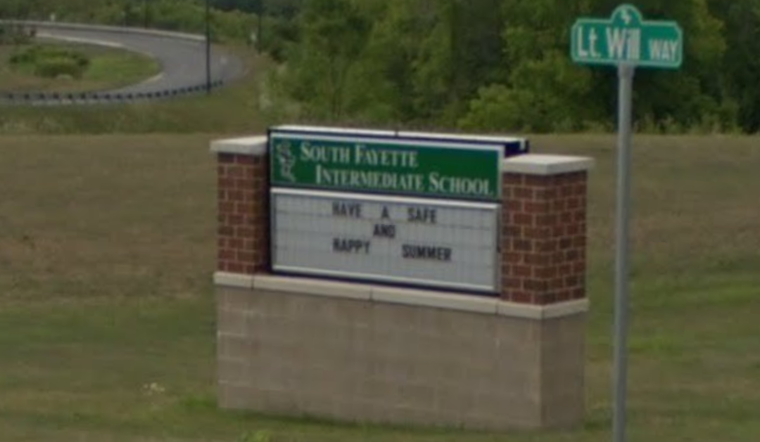
Dr. Andre Samuel, founder of the Citizen Science Lab, did not sugarcoat his story when he sat down with students at South Fayette High School on Feb. 12. He walked them through a path that ran from academic failures and tough years in Washington, D.C., to a biology doctorate and a nonprofit that puts real lab equipment in neighborhood spaces. The talk, part memoir and part pep talk, landed on a simple message: science can be a ladder to opportunity.
Samuel's visit was part of a Black History Month program organized by the school's SHOUT group, and local coverage highlighted the off-script moments as students quizzed him about his past. According to The Almanac, he told them he once failed microbiology and chemistry classes and leaned on music and films to avoid a dangerous path. The same reporting noted he recently stepped away for a three-month sabbatical, then came back to lead the lab again.
From Setbacks To A STEM Pipeline
Samuel eventually found his footing in science. His academic trail includes a biology degree from the University of the District of Columbia, graduate work in genomics and bioinformatics at George Washington University, and a Ph.D. in biology from Duquesne University, per The Citizen Science Lab. He launched the nonprofit to create local labs and long-term pipelines so students from underserved neighborhoods can get their hands on real research. The organization focuses on mentorship, hands-on learning, and career exposure instead of relying only on classroom instruction.
Project Dream Targets The Hill District
Now, Samuel is expanding that footprint back into Pittsburgh's Hill District through a renovation of the former Martin Luther King Jr. Reading and Cultural Center at 636 Herron Avenue. The New Pittsburgh Courier reported that a groundbreaking was held last April and that organizers expected the MLK Center for Scientific Excellence to open in the spring of 2026. Project leaders have cast the center as a neighborhood anchor that will combine science programming with public-facing community spaces.
What The Center Will Offer
The lab's Project Dream materials outline an ambitious mix of features, including a drone aviation area, public art zones, quiet study spaces, and a greenhouse designed to support food-science programming. Local reporting and the lab's fundraising pages describe the buildout as a multi-million dollar effort. WPXI reported a $100,000 grant from the Buhl Foundation and described the project as roughly a $5 million undertaking as organizers continue to seek donations. Supporters say the extra square footage will let the lab scale its camps, workshops, and pipeline programs beyond the current South Hills site.
Words To Live By
Samuel kept his takeaways straightforward: keep showing up, and keep building relationships. "Networking is a huge part of your success," he told students, crediting personal connections with helping raise the early operating funds that got the Citizen Science Lab off the ground. His blunt talk about failure, persistence, and fundraising was detailed in local coverage of the visit by The Almanac.
Why It Matters Locally
Back in Pittsburgh, leaders say the Hill District headquarters could dramatically increase who gets a shot at that ladder. The New Pittsburgh Courier reported that Samuel expects as many as 4,000 students a year to take part in programming across the Hill District and South Hills locations once both sites are fully up and running. Local directory listings show the lab currently operates out of a South Hills location at 1699 Washington Road, and organizers say the Hill District site will add both visibility and easier neighborhood access. By putting labs where students actually live, the group aims to make STEM feel like a real option, not a distant concept.
For South Fayette students, Samuel's visit worked as both a recruiting pitch and a reminder that the road into science rarely runs straight. As the MLK Center for Scientific Excellence moves from blueprint to bricks, the Citizen Science Lab is betting that visible, community-rooted spaces will change how Pittsburgh kids picture their futures.





