

























































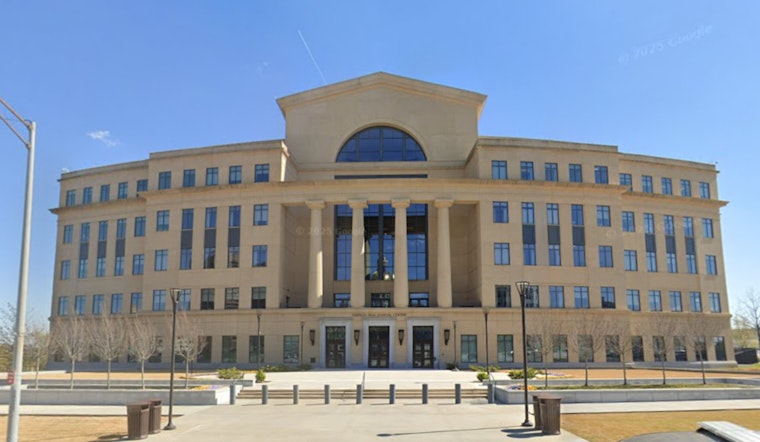
Georgia’s long-running fight over the "Stop Cop City" movement is heading upstairs. Attorney General Chris Carr said Thursday that the Georgia Court of Appeals has agreed to hear his challenge to a Fulton County judge’s order that threw out much of a racketeering indictment against 61 people tied to protests at the Atlanta Public Safety Training Center. The move pushes the high-profile litigation into the state appellate system and keeps alive a legal battle over the attorney general’s authority to bring RICO charges.
As reported by Atlanta News First, Carr filed an application to appeal last month and said Thursday the Court of Appeals has now agreed to take the case. His filing asks the court to reinstate counts that Judge Kevin Farmer dismissed in late December and to clear the way for the state to use racketeering theory in prosecutions tied to the protests.
The original 2023 indictment accused 61 people of participating in what prosecutors described as a broad conspiracy that included arson, vandalism and other predicate acts to support a RICO prosecution, according to The Atlanta Journal-Constitution. Carr’s filings say the alleged scheme targeted state employees and property across multiple agencies during protests against the training center.
In his December order, Fulton County Superior Court Judge Kevin Farmer concluded that Carr did not have the constitutional authority to bring the racketeering charges without written permission from Governor Brian Kemp, and he dismissed a large portion of the indictment. Farmer summed up the procedural flaw by writing that "the steps just weren’t followed," and the state quickly announced it would appeal, according to The Associated Press.
Farmer did leave a narrower set of charges intact. Five defendants still face state domestic-terrorism and arson counts tied to a January 2023 "night of rage" in downtown Atlanta, while the rest of the RICO counts were tossed, reporting by The Atlanta Journal-Constitution shows. local implications for protests and the training-center debate were also highlighted in Hoodline’s coverage of the December ruling.
Legal question at the center
The appeal asks the Court of Appeals to sort out a key phrase in Georgia’s RICO law: whether the statutory language "dealing with or for the state" reaches adversarial criminal conduct aimed at state employees and property, or whether it was meant only for business-style dealings with the government. Prosecutors say immediate appellate review is necessary because the racketeering count incorporates predicate acts that could be blocked by double jeopardy if the issue is left unresolved until after a jury verdict, a concern outlined by The Georgia Sun.
What’s next
Carr has asked the Court of Appeals for expedited consideration and says he will keep pressing the prosecution, arguing the state has evidence of coordinated attacks on state facilities and employees, according to reporting by CBS Atlanta. The appeals court will decide whether to grant that faster track; if it does, the fight over the attorney general’s authority could be resolved on a sped-up timetable.
However it plays out, the decision is likely to shape how Georgia law enforcement and prosecutors answer large, coordinated protest campaigns in the years ahead and could reverberate politically for Carr as he pursues a gubernatorial bid, as reported by The Associated Press. For now, the case shifts from Fulton County’s criminal docket to the appellate calendar, where the Court of Appeals’ next moves will determine whether the state’s racketeering theory is revived or left on the cutting-room floor.





