

























































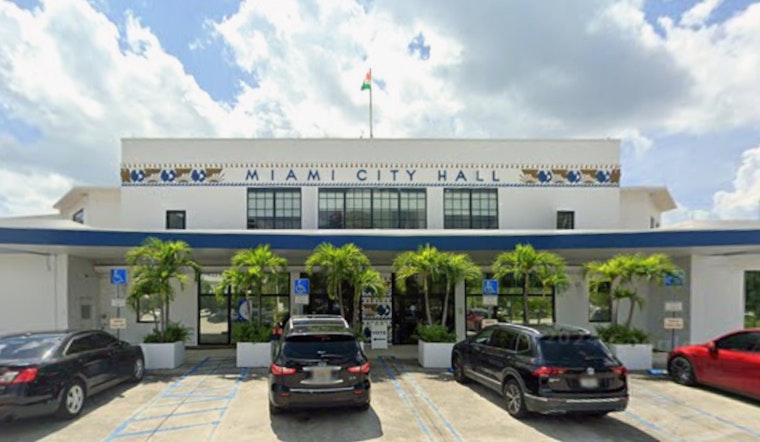
A citizen-led push to shake up Miami politics just cleared its first big hurdle. The campaign known as Stronger Miami says it has turned in more than 20,500 petition signatures, comfortably surpassing the legal threshold required to put a sweeping package of charter reforms in front of city voters in 2026. The proposal would expand Miami’s five-member City Commission to nine seats, lock in stricter rules for drawing district lines so neighborhoods stay intact, and move city elections to November of even-numbered years.
Supporters trace the effort back to last year’s bitter redistricting fight and a federal lawsuit that critics say left neighborhood representation watered down across the city. With boxes of petitions now in the hands of election officials, the campaign is shifting from clipboards to the far messier arena of verification, legal review, and bare-knuckle politics at City Hall.
What the petition would change
At the center of the Stronger Miami package is a structural overhaul of the commission itself. The proposal would bump the number of commissioners from five to nine, which would shrink the geographic size of each district and, backers argue, make it easier for neighborhood candidates to compete without raising eye-popping sums of money.
The charter language would also bar map drawing that is designed to protect incumbents or carve up cohesive communities, a direct response to the redistricting battle that helped spark the campaign. Organizers say they have collected more than 20,500 signatures, surpassing the requirement that a municipal charter petition be backed by at least 10 percent of registered voters from the last citywide election, as reported by The Miami Times. If Miami-Dade election officials confirm that enough of those signatures are valid, the package would head to the 2026 ballot.
Who is behind the drive
The political committee behind the effort, Stronger Miami, lists Anthony Parrish, Joseph Dye, and Gloria Maggiolo among its principals. On the ground, the campaign has been fueled by neighborhood groups including One Grove Alliance and Engage Miami, which helped turn signature gathering into a citywide organizing push.
One Grove director Mel Meinhardt framed the turnout as a show of civic muscle, calling it “what democracy looks like when residents demand better,” while Engage Miami’s Monica Bustinza said the final count reflected “broad, deep support across every corner of Miami,” according to WLRN. Organizers say a late surge of volunteers nudged the total from roughly 18,000 signatures to more than 20,500 in the final weeks.
Next steps and legal process
Under state law, changing a city charter is not as simple as dropping off a few boxes of paperwork. A municipal charter amendment must be supported by signatures equal to at least 10 percent of registered voters in the last municipal general election, a standard laid out in Florida Statute 166.031.
Petitions are routed to the Miami-Dade Supervisor of Elections, where staff check signatures against voter rolls. State Division of Elections rules generally give supervisors up to 60 days to complete that process, though the exact timing can vary depending on workload and volume. While election officials do the painstaking part, campaign organizers say they plan to start meeting with city commissioners to map out the procedural path that would place the reforms on the ballot, according to The Miami Times.
What this could mean for City Hall
Backers argue that adding four new seats could change the political math inside City Hall. Smaller districts, they say, would make it cheaper to run and would reduce the power of tight voting blocs on the current five-member commission, giving more neighborhoods a direct voice in decisions that shape everything from zoning to public safety.
The reforms grow out of a 2024 court fight over Miami’s voting maps and the creation of a citizen redistricting committee, a saga that reform advocates often point to as Exhibit A in their case for tighter rules, as explained by WLRN. Few at City Hall expect the next phase to be quiet, with likely battles over ballot language, possible legal challenges, and potential countermeasures from incumbents who could see their political turf redrawn.
If the Supervisor of Elections ultimately certifies enough valid signatures, the City Commission will be required to place the amendment on the next appropriate ballot or call a special election. Campaign organizers say they are betting that, when the dust settles, Miami voters will treat the measure as an opportunity to make local government more responsive and more focused on the neighborhoods where they actually live.





