

























































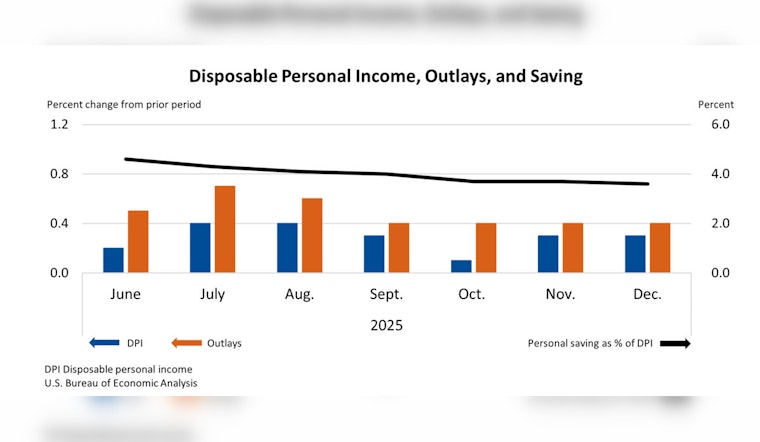
Inflation heated up in December and threw a bit of cold water on early rate-cut dreams. The Federal Reserve's preferred price gauge showed overall prices rising 0.4% from November and 2.9% compared with a year earlier, while the core PCE index that strips out food and energy also climbed 0.4% on the month and 3.0% year over year. All of that came as consumers kept swiping their cards, with spending up 0.4% in December.
What the report found
According to the Commerce Department's Bureau of Economic Analysis, the Personal Consumption Expenditures price index rose 0.4% in December and 2.9% from a year earlier, while core PCE increased 3.0% year over year. The agency noted that the December estimate was rescheduled after the October-November government shutdown. In the same release, the BEA reported that real PCE edged higher and personal income posted a modest gain for the month.
Why economists care
Analysts say the hotter-than-expected core reading makes near-term interest rate cuts less likely and has already pushed traders to rethink the Federal Reserve's timeline. As reported by Reuters, the unexpected strength in core prices raised doubts about an early-year easing and reminded policymakers that services inflation is still stubborn. Unless upcoming data show a clear cooling trend, borrowing costs could stay higher for longer.
What it means for wallets
Even with prices climbing, households kept spending at the same pace the previous month, with consumer spending up 0.4% in December after a 0.4% gain in November. That combination, rising core prices alongside steady spending, risks keeping the squeeze on grocery bills, rents and services that already hit many budgets hardest, as noted by Spectrum News. Economists warn that until services and shelter costs come down, consumers may not feel much relief even if the headline inflation rate drifts lower.
Local signal
Closer to home, the picture is more muddled. December's PCE uptick is landing alongside January Consumer Price Index readings that showed inflation cooling, leaving regional officials and small businesses to parse mixed signals. The headline CPI slowed to roughly 2.4% year over year, highlighting the gap between different inflation gauges, as January inflation slows more than expected reported. That split helps explain why local leaders are tracking both measures when they plan budgets and set wages.
What to watch next
Markets are already eyeing the Bureau of Economic Analysis next Personal Income and Outlays report for January, which is scheduled for March 13 on the agency's calendar. The December PCE reading was also folded into the advance estimate of fourth quarter GDP, a detail that helped magnify the market's reaction on Friday, as noted by Reuters. If January and February numbers cool, hopes for rate cuts could get a second wind. If they do not, the Fed may sit tight for longer.



