

























































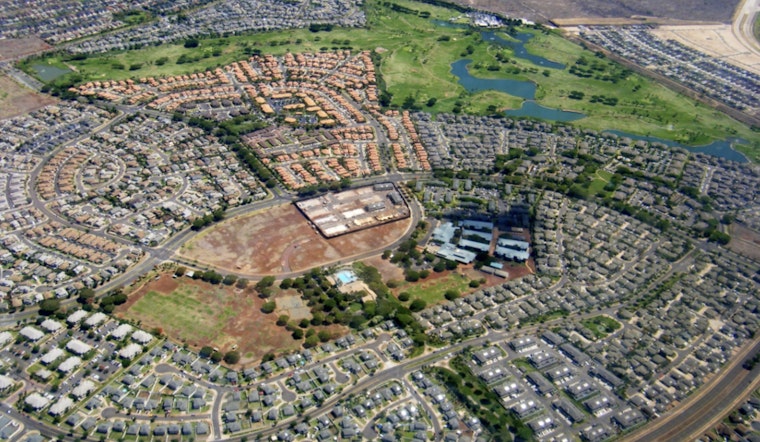
The Hawaii Housing Finance and Development Corporation has agreed to pay the City and County of Honolulu $60 million to end a long running fight over who owns and maintains the streets in the Villages of Kapolei. Under a settlement approved by the HHFDC board on Feb. 12, more than 100 roads, about 24 miles in all, will shift to city control. The money will be paid out over 10 years, closing an expensive chapter for a master planned community that took shape in the 1990s.
Board signs off on $60 million settlement
The state agency’s board backed a plan to deliver $60 million to the city in exchange for dedicating the subdivision streets, formalizing roughly six months of negotiations between state and county officials. HHFDC and city staff now have to hammer out a memorandum of agreement that will lock in the exact terms and timing for each street turnover. The details were reported by the Honolulu Star-Advertiser.
Legislature pushed for a deadline
State lawmakers had already put a clock on the dispute. A 2025 measure, SB662, ordered HHFDC and the City and County of Honolulu to complete the transfer of roads by Jan. 1, 2026, adding political pressure for both sides to reach a deal. The bill frames the move as a fix for a decades long stalemate over who is responsible for the neighborhood’s streets. As outlined by the Hawaii State Legislature, lawmakers were intent on forcing a conclusion.
How the deal unfolded
HHFDC Executive Director Dean Minakami told legislators that the agencies had already landed on the $60 million figure earlier, and that talks were paused after related bills were introduced at the Capitol. Minakami also described a verbal agreement with city official Mike Formby, underscoring that the settlement emerged from back and forth between state and city leaders rather than a one sided decree. The hearing transcript and related coverage are posted through Civil Beat’s Digital Democracy.
The local price tag
City engineers had put the cost of fixing the worst problem areas at about $80 million, and estimated that bringing every street up to full city standards could run as high as $90 to 100 million. Those projections helped shape what both sides viewed as a reasonable transfer payment. HHFDC staff told the board the agency has been spending roughly $6 million to $10 million a year on maintenance and that it put about $12 million into upgrades on several arterial roads in 2024. Before signing off on the current deal, the agency had previously floated a $40 million offer, according to the Honolulu Star-Advertiser.
Legal and policy backdrop
The Villages of Kapolei dispute traces back to state laws that carved out exceptions for housing agencies from county zoning and permitting rules, starting with changes in the late 1980s and later under the 201H development process. Those exemptions helped the state move more quickly on affordable housing projects, but they also left loose ends about who would eventually shoulder the cost of long term infrastructure maintenance. Reporting on Hawaii’s housing framework and the 1988 statutory changes is summarized by Hawaii Business.
What residents can expect next
Once the deal is fully implemented, city road crews are expected to maintain the streets to Honolulu’s standards, although the financial hit to the city will unfold over years of work and the 10 year payment schedule. Residents in the Villages of Kapolei have long complained about slow or stalled repairs tied to expired maintenance contracts, a pattern documented by Civil Beat’s “Fix It” coverage of sidewalks and tree upkeep. Before the streets can officially change hands, agencies still need to finalize the memorandum of agreement and sort out the accounting details for how the $60 million will flow over the next decade.





