

























































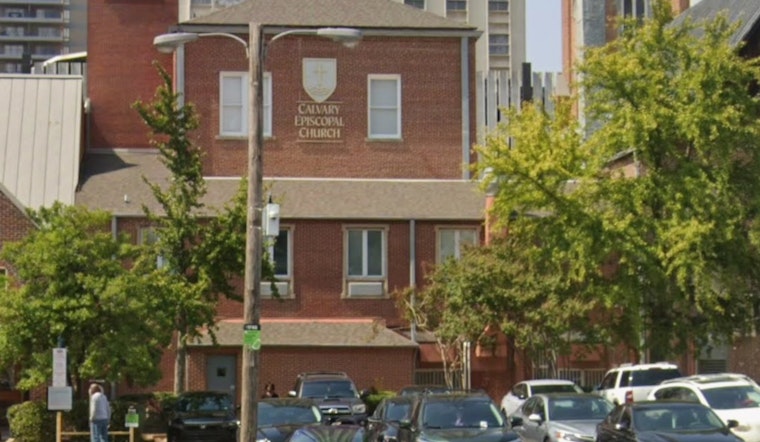
In the heart of downtown, Calvary Episcopal Church is getting ready to trade asphalt for memory. A section of its parking lot is slated to become a permanent memorial and research archive honoring the men, women, and children who were bought and sold on the infamous slave market block once known as 87 Adams. Organizers say the project aims to pull a painful story out of the shadows, put real names to i,t and let descendants and community voices shape how that story is told.
Design funding and scope
The church is covering the planning phase with an outside grant that funds concept and schematic design, community engagement, and archival work. A Request for Qualifications pegs the anticipated total project budget at about $1.2 million and spells out a step-by-step selection process for design teams, along with expectations for community-centered deliverables such as public programs and an archive. The RFQ also details reimbursement for semifinalists and lays out a proposed timeline for interviews and final team selection, according to Calvary Episcopal Church's RFQ.
The site and the numbers
The memorial will sit on land that was once officially designated 87 Adams, the block between Second and Adams streets, where local research estimates that roughly 3,800 enslaved people were sold in the mid-19th century. Calvary describes the effort as a truth-telling project that seeks “healing by honoring the thousands of lives traded at 87 Adams” while building an archive that documents as many of those lives as the researchers can trace, according to Calvary Episcopal Church.
Who uncovered the names
The push to recover individual names and stories started in large part with Rhodes College students in professor Tim Huebner’s Historical Methods class. Their archival digging helped shape the text for a new historical marker and for public readings that would follow. Students and faculty at Rhodes identified dozens of names that were later read aloud at a public Service of Remembrance and Reconciliation, a ceremony that organizers point to as a turning point in the momentum toward a full memorial, according to Rhodes College News.
Marker vandalism and the community response
The effort to confront this history has not been smooth. A historical marker installed in 2018 was snapped off its post in July 2020, then repaired and rededicated, a very public reminder of how contested memory still is in Memphis. In response, community groups, scholars, and church members leaned into the call for something more permanent and more deeply contextual, pressing for a memorial that centers the lived experiences of the people who were sold at 87 Adams. Documentation of the vandalism and the rededication is available from the Lynching Sites Project.
How the memorial will be selected
The RFQ seeks collaborative teams that blend artists, landscape architects, and researchers, and it emphasizes inclusive, community-engaged design practices. Interviews are scheduled for mid-July, with a design team expected to be chosen by the end of the month. Semifinalists will be reimbursed for concept work, and the committee notes a preference for contributors based in the Midsouth and for teams that include artists of color. Details on submission deadlines, points of contact, and the full scope of work are laid out in the RFQ, according to Calvary Episcopal Church's RFQ.
Part of a national rethinking of monuments
The Legacy of 87 Adams project is part of Monument Lab’s Re: Generation program, which backs community-driven public history and memorial efforts across the United States. Monument Lab lists the Memphis memorial in its Re: Generation 2024 cohort and describes the initiative as an attempt to broaden the public record and bring forward stories that have long been suppressed or erased, according to Monument Lab.
Organizers say the work is designed not only to remember the thousands who were sold at 87 Adams but also to help lay a foundation for reconciliation and education across the city. Community members and potential design partners who want to learn more or get involved are directed to Calvary’s Legacy of 87 Adams materials and the RFQ contact information, according to Calvary Episcopal Church.





