

























































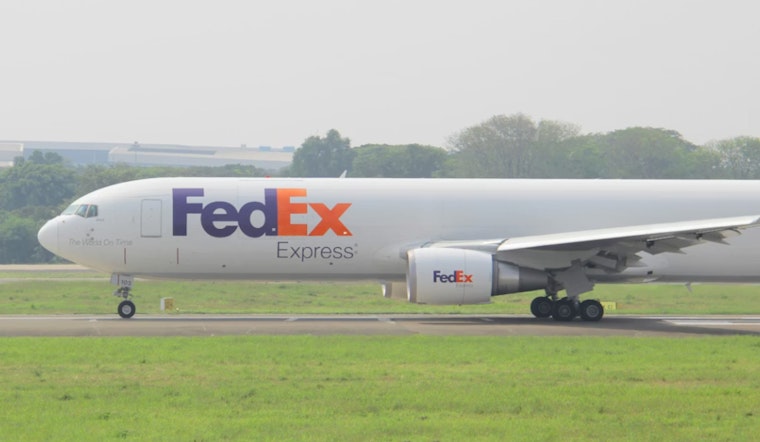
FedEx has hauled the U.S. government into court, filing suit Monday to claw back emergency tariffs the company paid under former President Trump’s sweeping import levies. The Memphis-based shipper says it was financially harmed when it served as the importer of record for shipments hit with those duties. The move comes on the heels of last week’s Supreme Court ruling that knocked out the legal foundation for the tariff program.
What FedEx is asking
In an 11-page complaint lodged with the U.S. Court of International Trade, FedEx and its affiliate FedEx Logistics say they are seeking “a full refund” of the International Emergency Economic Powers Act, or IEEPA, duties they paid while moving goods into the United States. The suit names U.S. Customs and Border Protection and its commissioner, Rodney Scott, as defendants but does not attach a dollar amount to the claim. The case was filed to preserve FedEx’s rights as an importer of record while the courts sort through the aftermath of the Supreme Court ruling, according to Al Jazeera.
The legal backdrop
The lawsuit follows a 6-3 Supreme Court opinion that found the International Emergency Economic Powers Act does not authorize the broad tariffs imposed under Trump, leaving the thorny refund question unresolved. Chief Justice John Roberts wrote that the statute “does not” give the president authority to levy such duties, and the court said challenges fall within the exclusive jurisdiction of the Court of International Trade, according to CBS News. Because the justices did not spell out how refunds should work, importers and their attorneys are now racing to file in trade court to keep their claims alive.
What it means for businesses and consumers
FedEx had already warned investors that the trade measures could hit its bottom line, telling shareholders last fall that the tariff policy package could cost the company roughly $1 billion. Other big importers have not waited around and have filed similar cases of their own. Economists and budget analysts estimate that anywhere from tens of billions to hundreds of billions of dollars in IEEPA tariff collections could ultimately be on the line, and many trade specialists expect that refunds will be decided shipment-by-shipment unless regulators step in with a different process, according to Forbes. That uncertainty raises a practical question: even if companies win refunds, will they pass the money back to customers or simply use it to plug past losses?
Where FedEx fits
Headquartered in Memphis, FedEx says it moves more than 16 million packages every day, which puts the company squarely near the center of any refund battle. The Memphis operation is the hub of its global network, according to FedEx. In a statement quoted by news outlets, the company said it had “taken necessary action to protect the company’s rights as an importer of record” while regulators and courts offer more clarity, as reported by CBS News.
What's next
Customs has already started deactivating the tariff codes tied to the IEEPA orders, and trade lawyers warn that any business hoping for a refund will need meticulous customs filings and contract records to back up its claim. The Court of International Trade now appears poised to become the main stage for these disputes, and attorneys say sorting out who gets what could take months or years while the courts, Congress, or the administration decide whether to set up a centralized refund program, according to Reuters. FedEx has said it will keep customers updated as the cases unfold and will “support our customers as they navigate regulatory changes.”



