

























































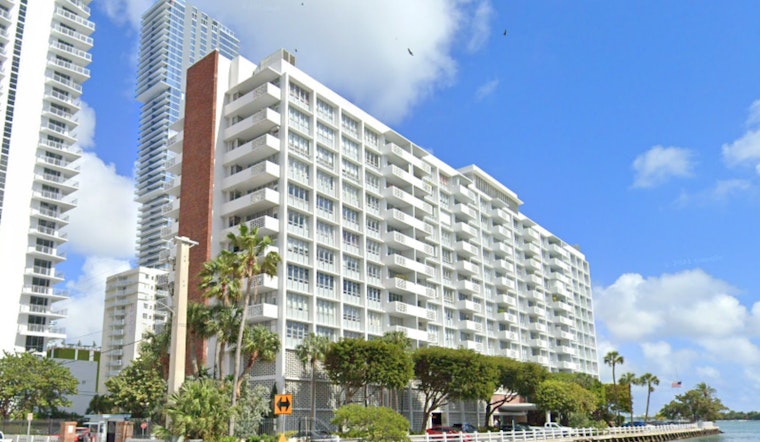
The long-running brawl over the Biscayne 21 condo tower in Miami’s Edgewater neighborhood just got louder. Two Roads Development has filed a fresh lawsuit that asks a judge to dissolve the Biscayne 21 condo association and clear the way for redevelopment. The filing lands shortly after a January court order told the developer to restore the gutted building to a livable condition. Holdout residents say the new suit is just another attempt to shove them out, while Two Roads insists that rebuilding the aging tower simply does not make financial sense.
In a complaint filed at the end of January, Two Roads affiliate TRD Biscayne asked Miami-Dade Circuit Court for equitable relief that would allow either a condominium termination or a court-ordered partition sale, according to The Real Deal. The suit says the tower is vacant, uninhabitable and condemned after decades of deferred maintenance by former owners, and it casts the remaining unit owners as blocking what the developer portrays as a profitable redevelopment play.
Judge Orders Rebuild, Blocks Demolition
In mid-January, Miami-Dade Circuit Judge Thomas Rebull ordered Two Roads to restore Biscayne 21 and its common areas to the condition they were in when residents first sued in May 2023, and he barred the developer from seeking rezoning or demolition permits, Bisnow reported. The order also requires Two Roads to submit regular progress reports on the repair work and to cover the full cost of reconstruction, a setup residents’ attorneys say should finally allow owners to move back into their homes.
Court filings show TRD Biscayne owns about 183 of the building’s 192 units, a level of control the developer argues leaves termination as the only realistic option, according to Miami Condo Investments. Two Roads’ complaint pegs the repair cost at roughly $61 million, and company managers have told reporters they consider a full rebuild uneconomic. If a judge agrees, the developer says the case could move to a court-ordered partition sale that would wipe the slate clean on title and open the door to a new project, The Real Deal reported.
Residents Seek Damages
The holdout owners have not exactly taken that lying down. On Thursday, they filed their own new complaint seeking at least $100 million in damages, arguing they were forced from their homes and left with units that had been stripped to the studs, as reported by the Miami Herald. One plaintiff, Robert Murphy, says he was pushed out in September 2023 and discovered his unit gutted when he was finally allowed back in two months later. Lawyers for the residents say those details are part of a broader claim for massive damages.
Legal Maneuvers and What's at Stake
At the center of the fight is a technical but high-stakes legal question: whether Two Roads could legally change Biscayne 21’s governing declaration to lower the unanimous vote requirement for condo termination. The Third District Court of Appeal rejected that strategy last year, and the Florida Supreme Court declined to review the case, undercutting the developer’s earlier game plan, according to Bisnow. The appeals court ruled that the original unanimity requirement could not be changed unilaterally, a decision residents’ attorneys say shields small owners across Florida from being squeezed out of older condo buildings.
Residents’ counsel say the latest filing from Two Roads is just more of the same. Attorney Glen Waldman labeled the new lawsuit “a non-event” and “a last-ditch effort,” while other condo lawyers described the earlier cutting of services and partial demolition at Biscayne 21 as a high-risk bet, the Miami Herald reported. Donna DiMaggio Berger, a South Florida attorney who has represented condo associations, told reporters that beginning demolition before the legal fight wrapped up was “a gamble” that could leave the developer footing the bill to rebuild homes it had already torn apart.
All of this has turned Biscayne 21 into a closely watched test case. Legal experts and developers say the outcome could reshape how investors approach bulk buyouts of aging waterfront condos across South Florida, potentially raising both the financial and legal risks of trying to force out a handful of determined holdouts. The broader real-estate world is watching too, a point The Wall Street Journal has already highlighted.



