

























































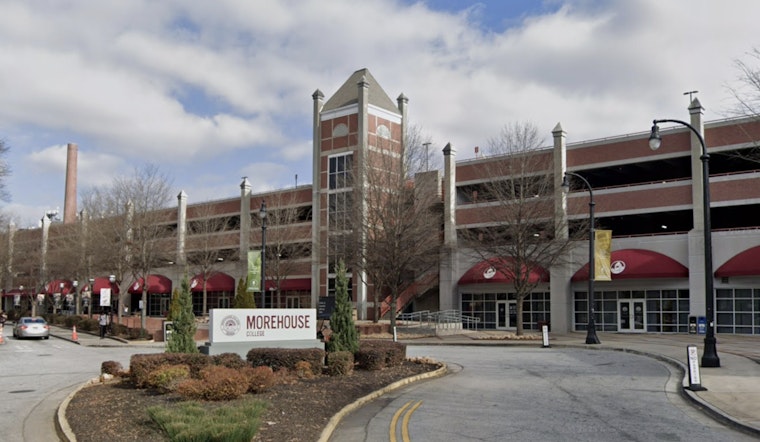
Atlanta’s West End is about to get a serious computing upgrade. Morehouse College has secured a $5 million grant to build and host part of a new national supercomputer, a move campus leaders say will bring top-tier artificial intelligence and scientific computing directly to the historically Black men’s college.
The funding will help Morehouse create on-campus infrastructure and programmatic support that the school says will give its students and partner HBCUs hands-on access to high-powered tools for climate modeling, machine learning and biomedical computing.
According to the National Science Foundation, the effort is part of a $457 million Leadership-class Computing Facility that will deploy Horizon, a system projected to deliver roughly 10 times the simulation performance and more than 100 times the AI performance of the current Frontera machine. The Texas Advanced Computing Center at UT Austin is leading construction and coordination of the distributed facility, working with commercial colocations for hardware and storage.
Morehouse’s role and programs
Morehouse’s Center for Broadening Participation in Computing received the initial $5 million to begin construction of a campus site that will house Horizon and to fund national training and outreach, according to Morehouse College. The college says the grant will underwrite free summer enrichment programs for middle- and high-school boys, a postbaccalaureate program in artificial intelligence and weeklong faculty accelerators in Punta Cana intended to strengthen research and grant-writing capacity.
“By hosting one of the Southeast’s most powerful academic supercomputers, we are providing HBCUs with unprecedented computational power,” Morehouse President F. DuBois Bowman said in a statement to the college.
Why this matters for Atlanta and HBCUs
Supporters argue that placing leadership-class computing power on an HBCU campus could help diversify the pipeline into AI and high-performance computing by giving underrepresented students earlier exposure to the same tools typically found at flagship research universities and national labs. Forbes has framed the Leadership-class Computing Facility as one of the largest recent U.S. academic computing investments, structured to serve broad research communities through peer-reviewed allocations.
Timeline and next steps
Morehouse enrolls about 2,500 students, and local reporting notes the college could have the system up and running by the end of the year, the Atlanta Business Chronicle reported. The Texas Advanced Computing Center and NSF say Horizon installations are underway and expect availability in early 2026, with researcher allocations governed by open peer review.



