

























































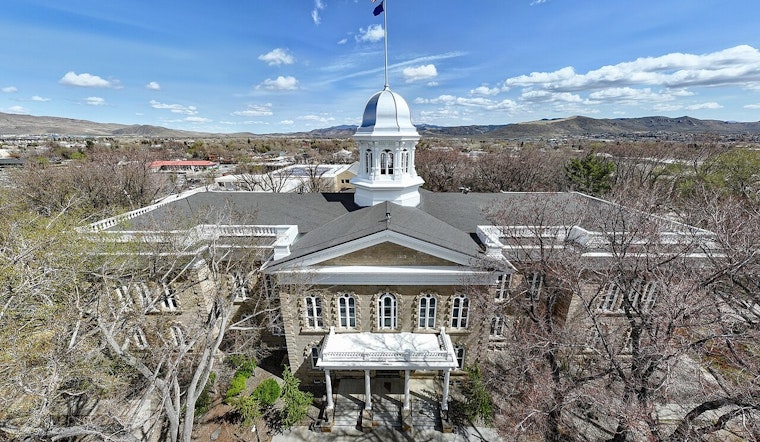
Nevada Attorney General Aaron Ford is now staring down a public ethics fight, after a state review panel on Tuesday advanced multiple complaints against him to the full Nevada Commission on Ethics. The move clears the way for a formal adjudicatory hearing that could lead to sanctions and drops a fresh complication into the state’s 2026 governor’s race, where Ford is the leading Democratic contender.
The complaints target outside-funded travel and official social-media posts that critics say blurred the line between Ford’s public office and his campaign presence. Ford, who chaired the Attorney General Alliance in 2024, has said he respects the commission process and expects a full review to find that he followed the rules.
The three-member review panel’s written determination, signed by Scott Scherer and Commissioner Teresa Lowry, concluded there was sufficient cause to send a consolidated set of complaints to the full commission for further action. As reported by the Las Vegas Sun, that referral shifts the matter out of the confidential investigative phase and onto the public docket.
What the complaints allege
The filings accuse Ford of accepting more than $35,000 in travel and hospitality linked to the Attorney General Alliance and other outside sponsors, and of using official social-media posts that pointed users to a campaign account that included a donation portal.
Financial-disclosure records and prior reporting describe alliance-supported travel in 2023 to South Africa, Poland, Israel and South Korea, trips that have fueled questions about whether outside-funded travel can create conflicts of interest for public officials. That background reporting was detailed by the Las Vegas Review-Journal.
Timeline and next steps
Under Nevada law, once a review panel sends a case forward, the full Commission on Ethics must hold an adjudicatory hearing and issue an opinion within 60 days, unless the public officer agrees to waive that deadline. The subject of the complaint is entitled to formal notice and the right to be represented by counsel. Those procedures are laid out in state ethics statutes and the commission’s rules. See NRS 281A.745 and the Nevada Commission on Ethics public meeting schedule.
The commission’s calendar currently lists March 18, 2026 as an upcoming session when members and staff could discuss how to structure the proceedings and set key dates. The exact timing and format of any hearing will be up to the full commission.
Ford's response
Ford’s office has told reporters that some of his 2024 travel was covered by the organizations sponsoring those trips, consistent with existing practice, and that staff stopped tagging his personal campaign account in official posts after questions were raised about the practice. Supporters have pointed to his office’s work on opioid litigation, consumer protection and criminal prosecutions during the same period as evidence that his official duties were being carried out, according to the Las Vegas Sun.
Political stakes
The ethics case arrives as Ford heads into a June Democratic primary ahead of a likely November showdown with Gov. Joe Lombardo, turning the commission review into a potential liability in a high-profile statewide race.
Republican allies are already working to make sure voters hear about it. A pro-Lombardo political action committee has launched a seven-figure ad buy focused on Ford’s travel record, according to The Nevada Independent.
Legal implications
If the commission ultimately finds that Ford committed a willful violation of state ethics law, it can impose civil penalties of up to $5,000 for a first willful violation, with higher maximums for subsequent offenses. The commission can also order restitution that matches any financial benefit the official received.
Nevada’s handling of recent, politically sensitive ethics cases shows that outcomes can range from negotiated payments to more formal sanctions, depending on the findings. The statutory framework appears in NRS Chapter 281A, and past resolutions of high-profile cases have been covered by the Las Vegas Review-Journal.
The full commission must now decide whether to schedule an adjudicatory hearing and set deadlines for evidence, filings and witness testimony. If a hearing is scheduled, the 60-day clock will start running unless Ford waives it. In the meantime, the matter will sit on the commission’s public agenda as campaign season heats up. Formal notices and updates will appear on the commission’s online calendar at the Nevada Commission on Ethics.





