

























































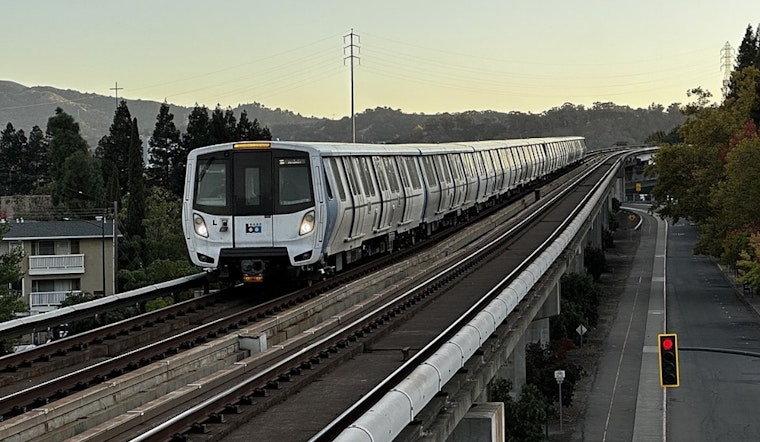
Congresswoman Lateefah Simon is trying to rewrite the rules for how the federal government funds safety on public transit, and BART’s growing ranks of unarmed ambassadors are front and center in that push. Her proposal, formally called the Rapid Intervention and Deterrence for Enhanced Rider Safety Act, or the RIDER Safety Act, would let transit agencies use federal crime prevention money to fund unarmed, uniformed ambassador teams instead of limiting those dollars to police or brick-and-mortar security projects. Supporters say that shift would help scale a model that focuses on connecting people in crisis to services rather than defaulting to arrests.
What the bill would change
Filed in Congress as H.R.6069, the measure would amend Title 49 so that operational grants from Federal Transit Administration crime prevention and security programs can pay for transit support specialists. That is the bill’s term for unarmed ambassadors who monitor stations and trains, assist riders, de-escalate noncriminal conflicts and link people to help, according to Congress.gov. The bill language lists duties such as reporting suspicious activity, handling minor incidents and helping with medical emergencies, effectively making salaries and day-to-day operations eligible expenses under certain federal grants.
BART data: how the teams are working now
BART’s own performance reporting shows the system is already steering many situations away from enforcement. Its FY26 Q1 presentation lists 2,591 CIS calls diverted, 1,645 wellness checks and 206 dispatch referrals for the July–September 2025 quarter, along with thousands of progressive policing contacts that produced hundreds of referrals to social service providers. Those figures sit inside BART’s broader data set on how unarmed outreach teams and crisis intervention specialists are being deployed systemwide, according to BART.
Voices on the ground in Oakland
On the platforms and trains, the pitch for the program is less about policy jargon and more about how encounters actually end. Local ambassadors and BART officials told reporters the program prioritizes referrals and care. One outreach leader described ending contacts "with respect" and meeting people "with humility," while a BART official pointed to hundreds of service connections and thousands of welfare checks routed through the progressive policing unit, as reported by The Oaklandside. The same coverage notes BART officials saying systemwide crime has fallen in recent measurements and that local partners such as La Familia and Bay Area Community Services are frequent referral destinations. AC Transit leaders, the reporting adds, said they would try to place similar unarmed ambassadors on bus rapid transit corridors if federal rules change to allow operational funding.
What evaluations say about ambassador programs
Independent evaluations suggest ambassador programs are promising but still a work in progress. A December 2025 review of LA Metro’s pilot found ambassadors spent most of their time giving directions, calming crises and administering naloxone, while also identifying gaps in conflict resolution training and worker conditions. Advocates say those lessons should shape any national rollout, according to the UCLA Institute of Transportation Studies. Broader academic reviews have similarly found that outreach and referral approaches tend to connect unhoused riders to services more effectively than enforcement-first models.
Where the bill goes from here
H.R.6069 was introduced in mid November 2025 and sent to the House Transportation and Infrastructure Committee and its Subcommittee on Highways and Transit. The subcommittee will decide whether to move the bill to the full committee or straight to the House floor, according to Congress.gov. If the text advances, agencies say it would give them a clear federal funding path to expand unarmed crisis intervention teams, although lawmakers and oversight bodies are expected to press for training standards, accountability measures and data requirements tied to any grant dollars.
Why it matters for Bay Area riders
For Oakland and the wider BART service area, the RIDER Safety Act would turn a local experiment into something that could be scaled with federal money. In practice that could allow BART, AC Transit and other agencies to bring on more outreach workers whose focus is care and connections rather than policing. Riders, transit managers and advocates will be watching subcommittee hearings and any attached reporting requirements closely to see whether the promise of more ambassadors comes with the training and oversight needed to keep both workers and the public safe.





