

























































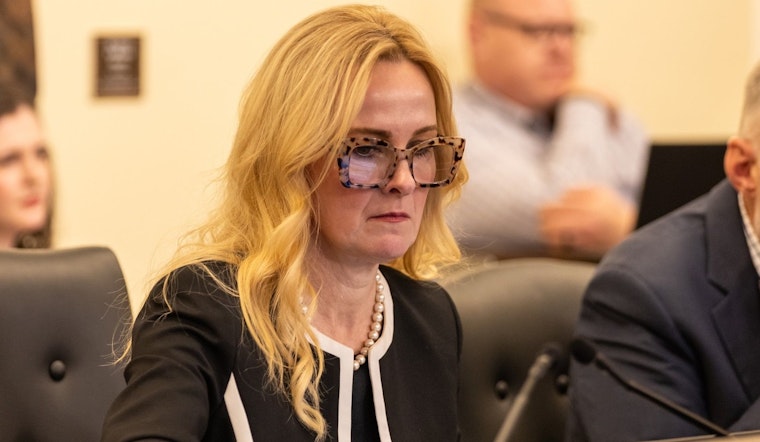
On Wednesday, in an Oklahoma legislative move, House Bill 3240 advanced through the House Appropriations & Budget Subcommittee on Education. This measure, introduced by Rep. Toni Hasenbeck, R-Elgin, is all about giving students and school employees the space to practice voluntary religious activities, like prayer or reading religious texts, during non-instructional times at public schools. It's a piece to clearly mark the lines post a 2022 Supreme Court decision and to alleviate any litigation fears from school districts.
Rep. Hasenbeck, leveraging on her educator background, mentioned, "House Bill 3240 ensures that students and school employees who wish to voluntarily express their faith have the opportunity to do so." She added, "This legislation is structured carefully to create a clear, constitutional framework for our schools while protecting the rights of those who choose not to participate," in a statement obtained by the Oklahoma House of Representatives. Parents or guardians must give their written consent before a student can participate in these voluntary activities, with the right reserved to revoke consent at any time.
Under the proposed HB3240, schools would be prohibited from broadcasting prayers or readings over public address systems, and such activities could not interfere with instructional time. The bill directs the Oklahoma Attorney General to guide compliance, offer model consent forms, and extend legal support to schools that implement policies in line with state law. If approved, the rules would take effect in the 2026–2027 school year.
Oklahoma could potentially see this roll out across all its school districts and charter schools once HB3240 passes the full House Appropriations & Budget Committee gauntlet. Proponents see it as a gateway to let religious expression live freely in schools, while critics are likely to argue the possible challenges of separating church and state. Nevertheless, Oklahoma's playing field for voluntary prayer in public schools is poised to markedly shift with this piece of legislation on the horizon, according to the Oklahoma House of Representatives.





