

























































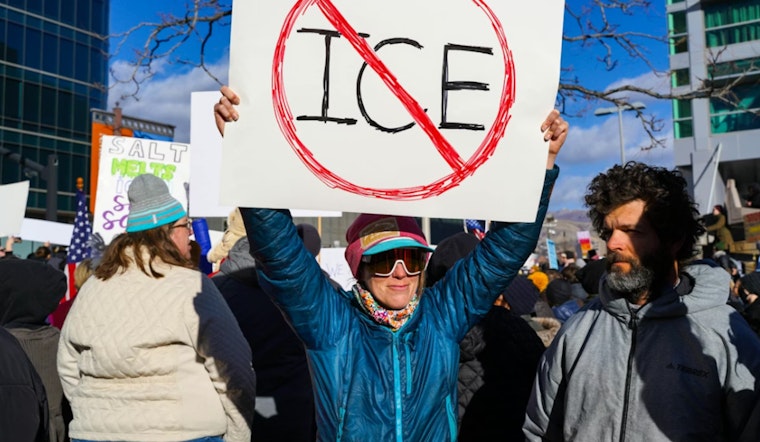
Olympia Mayor Dontae Payne is pushing the city to adopt a new policy that would keep U.S. Immigration and Customs Enforcement off municipal property, citing a similar move underway in Seattle. At a Feb. 3 meeting, the City Council signaled strong support for having staff study the idea, and city employees have already circulated a resource flyer that walks residents through how to handle encounters with federal agents. The push puts Olympia in the growing club of West Coast cities wrestling with how local governments should respond to stepped-up federal civil immigration enforcement.
Payne formally asked City Manager Jay Burney to study a measure that would restrict ICE from using city-owned property, and the council voted to back that request, according to The Olympian. Payne told the paper he was “very intrigued” by the action taken by Seattle Mayor Katie Wilson, and Mayor Pro Tem Yến Huỳnh also voiced support for limiting ICE access to city facilities.
In Seattle, the mayor last month issued directives that bar civil federal immigration enforcement operations from being staged on city-owned property and ordered the Seattle Police Department to “investigate, verify and document” any reported ICE activity. As reported by KIRO, officers are instructed to record that activity on in-car and body-worn cameras and, when feasible, to verify the identification of anyone who appears to be a federal immigration agent.
Olympia officials have rolled out their own informational tool: a flyer titled “Safety guidance for interactions with U.S. Immigration Customs and Enforcement (ICE).” It outlines key rights, including the right to remain silent, the option to ask if you are free to leave, and guidance on photographing or filming in public, according to The Olympian. The paper reports that the flyer also includes QR codes linking to local resources and to Olympia Police Department Policy 413, which the department says limits its role in federal immigration enforcement and instructs officers not to ask residents about immigration status.
Legal Questions and Federal Pushback
The Department of Homeland Security has already pushed back on the concept, telling The Olympian that such a move would be “legally illiterate” and emphasizing that immigration enforcement is a federal responsibility. Municipal attorneys note that the idea raises familiar questions about federal preemption and whether a local rule that tried to keep ICE off municipal land might be tested in court or trigger a formal challenge from the federal government.
What Comes Next
For now, the request sits in the research phase. City Manager Burney has been tasked with returning to the council with options and legal analysis before any ordinance is drafted, so the move is currently a policy direction rather than a binding ban. Olympia police say they will continue to follow Policy 413 during the review, while advocates on both sides are bracing for a broader public fight that could feature rallies and packed comment periods at future council meetings.
Residents will be watching to see whether the study ends in a formal ordinance, some kind of negotiated operating rule with the police department, or legal pushback from state or federal officials. They will also be looking to see whether nearby cities follow Seattle and Olympia in rethinking how municipal property can be used during immigration enforcement operations, or whether this remains a largely symbolic local stand against federal power.



