

























































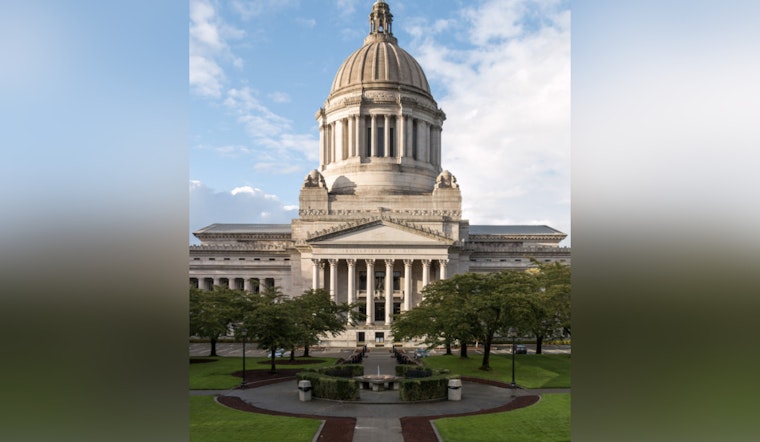
Cutoff day in Olympia lived up to its name Thursday, taking out one of the Legislature’s splashiest road-safety ideas while letting several other hot-button bills slip through to the next round. A push to drop Washington’s per se blood-alcohol limit to 0.05 stalled in the House, even as proposals to tackle crime-lab backlogs, curb law-enforcement face coverings and hammer out new supplemental budgets all kept moving. The result: both sides are gearing up for bruising floor debates and budget horse-trading in the weeks ahead.
As reported by MyNorthwest, a key House committee decision effectively killed the DUI limit change after it had already cleared the Senate, and the cutoff reshuffled a stack of public-safety and spending bills. Some measures advanced, others were left on the cutting-room floor, setting competing priorities for the rest of the session.
Which DUI Proposal Died And What It Was Aiming To Do
Senate Bill 5067, sponsored by Sen. John Lovick, was the flagship DUI measure. It would have reduced the per se BAC threshold from 0.08% to 0.05%, required a statewide public-education campaign and ordered an evaluation by the Washington State Institute for Public Policy. According to the Legislature’s bill report, the measure made it through the Senate but failed to secure the votes it needed in the House before the committee cutoff deadline. Washington State Legislature.
Supporters argued the change would save lives. The Insurance Institute for Highway Safety points to an evaluation of Utah’s shift to 0.05 that found about a 20% relative decline in fatal crash rates in the years after the law changed, a statistic sponsors leaned on as proof the approach can work. IIHS.
Backlogs, Outsourcing And The Lab Fix That Stayed Alive
Lawmakers kept Senate Bill 5880 alive, a proposal that would allow blood and breath analyses to be performed by laboratories certified or accredited under the ISO/IEC 17025 forensic standard. In practical terms, that would let agencies ship samples to private, accredited vendors when the state lab is overloaded. The bill text spells out permitting rules, quality-control requirements and chain-of-custody standards for any outside labs. Washington State Legislature.
Seattle City Attorney Erika Evans told lawmakers that toxicology turnaround times at the state lab can stretch past a year, with some Seattle cases she cited waiting as long as 22 months. She argued that opening the door to accredited private labs could speed up prosecutions and cut down on repeat offending while evidence sits in the queue, according to reporting by KIRO Newsradio.
Face Coverings And A Legal Knot For Police
Another bill that survived the deadline, Senate Bill 5855, would clamp down on when officers can wear opaque face coverings during public interactions. The measure advanced after a public hearing that sharply divided supporters and law-enforcement groups. Backers say the limits would boost transparency and accountability for officers interacting with the public, while critics warn it could put officers at risk and trigger federal preemption fights. Local coverage of the debate appeared in KHQ.
Budget Fights Still Front And Center
The money battle may be even tougher than the policy fights. Senate Democrats have floated a supplemental budget that would add roughly $2.5 billion in new spending while drawing from the state’s rainy-day fund. House Democrats, meanwhile, put out a competing plan that leans more heavily on reserves, including more than $800 million in one draft. Reporting by KIRO Newsradio outlined the rival price tags and flagged proposed trims to programs such as Running Start.
What Happens Next In Olympia
Cutoff day narrows the agenda, but it does not end the session. Bills that made it out of committee still have to clear floor votes, survive work in the Rules committee and meet fast-approaching budget deadlines. And as veteran Olympia watchers know, ideas that look dead can reappear through amendments or tucked into budget language. Legislative trackers map out the calendar and key dates ahead; WA Legislative Tracker breaks down how the cutoff system works and what comes next.
For drivers, educators and employers, the message is mixed. The high-profile 0.05 DUI push is on ice, but efforts to fix lab delays, tighten rules on face coverings and reshape the state’s spending plan are still very much alive. Floor votes and closed-door budget talks will decide which of these surviving measures actually make it into law.





.jpg)