

























































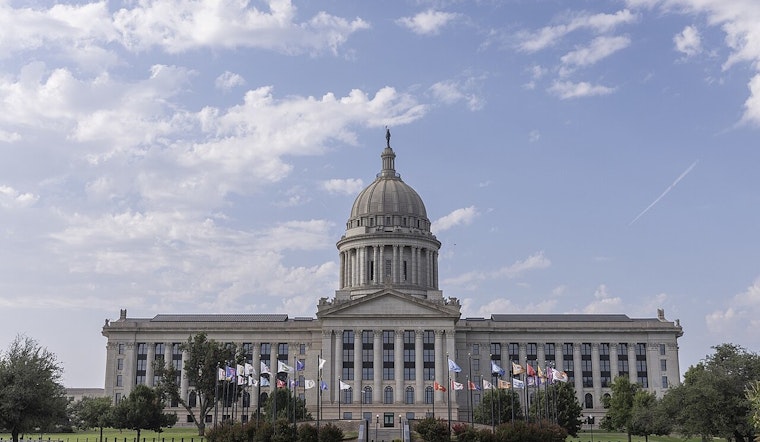
In a one-vote nail‑biter on Thursday, the House Civil Judiciary Committee voted 5‑4 to kill HB 3094, a proposal that would have let certain license holders carry concealed handguns inside the Oklahoma State Capitol. Filed by Rep. Molly Jenkins, the bill put lawmakers in a familiar crossfire between public-safety worries and constitutional-rights arguments. Supporters argued that licensed Self‑Defense Act holders are low‑risk and should not have to disarm to walk into their own Capitol, while opponents warned the change could complicate security and add pressure on troopers assigned to the building. With the committee vote, the bill is stalled for the rest of the legislative session.
HB 3094 would have changed state law so that anyone holding a valid handgun license under the Oklahoma Self‑Defense Act could carry a concealed handgun into the Capitol after presenting that license at security, according to the Oklahoma Legislature. The introduced language specifies that a licensee may “proceed through the security checkpoint with a concealed handgun upon presentation of the valid handgun license.” The measure was filed in early February and routed to the House Civil Judiciary Committee for consideration, per LegiScan.
Troopers and staff raise safety concerns
Department of Public Safety Commissioner Tim Tipton told the committee the plan would create “a manpower issue” for troopers and warned that “simply looking at somebody’s open or concealed carry permit card is not going to allow us to vet them properly,” as reported by KOKH/OKCFOX. State Rep. Mike Osburn cautioned that it would be “unreasonable to make staff worry whether this person already has a nine millimeter on their hip,” while Rep. Molly Jenkins countered that the recidivism rate among Self‑Defense Act cardholders is “a fraction of a percent.” The clash over whose safety should carry more weight set up the committee’s tight split.
Committee vote kills measure
The House Civil Judiciary Committee ultimately voted 5‑4 to fail HB 3094, and KOKH/OKCFOX reports the bill “will not be moving forward this legislative session.” The outcome reflected ongoing disagreement over whether expanding carry rights inside the Capitol is worth the added security burden on staff and troopers. With the committee’s decision, the proposal is effectively shelved unless its backers find another procedural route.
What the bill would have changed
The text of HB 3094 would have amended 21 O.S. §1277 to remove the State Capitol from the list of places where licensed holders are barred from carrying concealed weapons, effectively allowing a licensee to “proceed through the security checkpoint with a concealed handgun upon presentation of the valid handgun license,” per the bill text. It also states that officers may not remove or inspect a properly concealed handgun without probable cause, a shift supporters framed as a protection for law‑abiding visitors and critics argued could limit the tools available to troopers watching for trouble. Those legal mechanics, along with practical questions about how checkpoints would function, sat at the center of committee members’ concerns.
What’s next
Because the committee failed the measure on Thursday, HB 3094 will not advance this legislative session unless sponsors refile it or pursue another procedural option. The bill was introduced in early February and assigned to Civil Judiciary, according to LegiScan, leaving sponsors room to revise the language and try again in a future session. In the meantime, lawmakers and the Department of Public Safety are likely to keep weighing how any future proposal would mesh with day‑to‑day Capitol security.
For now, existing rules at the Capitol stay in place, and the larger fight over guns in Oklahoma’s public buildings is almost certain to resurface. The narrow vote showed how quickly arguments over safety, staffing and rights can collide once policy ideas hit the realities of running a statehouse.





