

























































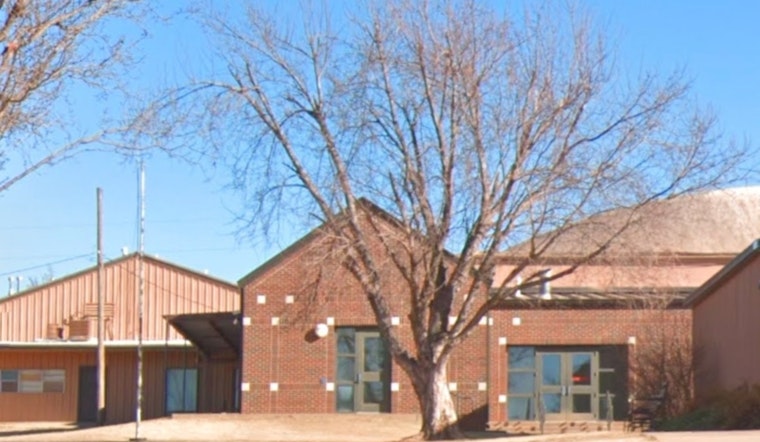
A high school basketball tournament in rural Oklahoma turned from routine winter matchup into a life-or-death scramble when a 16-year-old player collapsed on the court. Life Christian Academy guard Magnus Miller, a trained lifeguard who is now a freshman at the University of Oklahoma, stepped in, started CPR and helped apply an automated external defibrillator until medics arrived. His quick action, taken while a snowstorm slowed emergency crews and stretched response time to nearly 30 minutes, is being credited with saving the teen's life.
How the lifesaving play unfolded
According to KOCO, the player collapsed just minutes into a game at Mulhall-Orlando High School, and staff discovered he had no pulse. Miller, relying on his lifeguard training, immediately began directing coaches and bystanders in CPR and helped get an AED placed on the student. Guthrie firefighters later described those steps as lifesaving. Miller told KOCO, "I just jumped right in and took control."
Minutes that mattered
KOKH reports the tournament was played in the middle of a snowstorm and that EMS did not arrive at the gym for close to half an hour. Jason Carter of OU Health told the station that every minute without CPR can cut survival odds by roughly 7 to 10 percent, and that brain injury can begin within four to six minutes. Those numbers highlight why fast action from people already on scene can be the deciding factor in small towns and rural areas.
Why CPR and AEDs change the odds
Medical organizations have hammered on the same message for years: early CPR and rapid defibrillation dramatically improve the chances of surviving sudden cardiac arrest. The American Heart Association urges bystanders to use hands-only CPR and nearby AEDs as quickly as possible because survival drops fast when no one intervenes. In communities where distance, weather or both slow an ambulance, trained bystanders and easily accessible AEDs effectively become the first wave of emergency care.
After the collapse
National coverage reports that the teen, identified in other outlets as Randy Vitales of Dover High School, was transported to Oklahoma Children's Hospital and later released to continue recovering at home. People notes that Vitales later attended a benefit game, while supporters raised money and sold "Dover Strong" shirts to help his family. Coaches and first responders were publicly recognized at subsequent games as the community rallied around both teams.
Training and policy in the spotlight
Miller has since taken the story beyond the local gym. KOCO reported that he traveled to Washington, D.C., to advocate for funding under the HEARTS Act to expand CPR training and AED access in schools. For many smaller districts, the incident underscores a straightforward reality: a relatively modest investment in training and equipment can narrow the dangerous gap when snow, distance or long response routes delay an ambulance.
The outcome in Orlando could easily have been tragic. Instead it stands as a pointed local reminder that a few minutes of training, one working AED and a calm, prepared bystander can turn a terrifying emergency into a survival story.




