

























































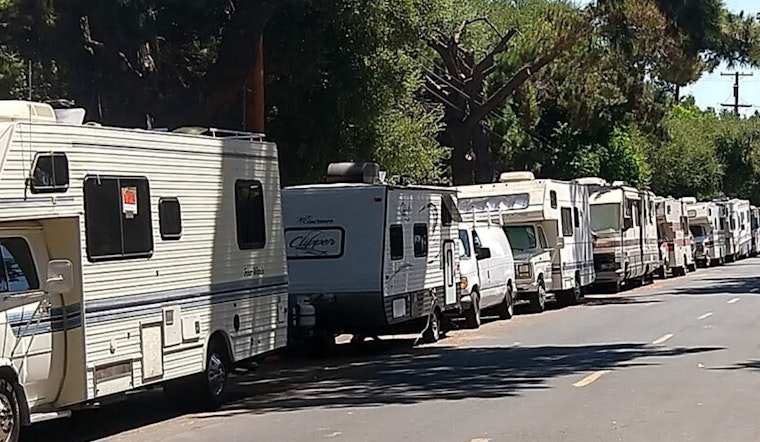
Palo Alto has been towing RVs and scrubbing curbs far more aggressively in recent months, but the city’s big cleanup is pleasing almost no one. Neighbors say the crackdown still has not fixed long-running sanitation problems, and people living in their vehicles say they are being pushed around town without a realistic place to land.
City report: Tows spike, trust takes a hit
The Oversized Vehicle Ad Hoc Committee’s first report shows a clear winter enforcement surge, with dozens of oversized vehicles towed and targeted deep-clean operations rolled out around RV clusters. At the same time, city staff warn that heavy-handed enforcement can erode trust with vehicle dwellers the city is also trying to reach.
According to Palo Alto Online, police have hauled away several dozen oversized vehicles since last fall, and cleaning crews have done intensive sanitation work in about half of the clusters staff identified. Councilmember Julie Lythcott-Haims told the committee that a whack-a-mole approach is silly and does little to honor the dignity of residents who have no better housing options.
Council’s tools: Vanlording ban and parking squeeze
Looking to tighten control, the City Council moved last winter to arm itself with tougher rules, including a new “vanlording” ban aimed at people who rent out RVs on public streets. NBC Bay Area reported the package of ordinances won approval in December, bringing fines for violators while keeping the city’s long-standing 72-hour parking limit as a key way to enforce the rules. City leaders say the policy shift came alongside a stepped-up push for street sweeping and sanitation in RV hot spots.
Neighbors want relief, RV dwellers want somewhere to go
Homeowners and business owners who live and work near RV clusters say seeing more tow trucks has not ended the complaints about trash, sewage and blocked sidewalks. People living in the vehicles, meanwhile, say they need legal places to park and basic services if the city expects them to comply.
Regional reports have documented a sharp jump in vehicle dwelling across the Peninsula in recent years, and local counts suggest Palo Alto’s population of people living in vehicles roughly doubled between 2023 and 2025. Advocates and some council members have pressed the city to pair enforcement with sewage pump-outs, garbage pickup and more safe-parking spaces instead of relying on simple displacement (Mountain View Voice).
Permit pilot and a regional huddle
Trying to thread the needle, the ad hoc committee is exploring a limited permit pilot that would reserve certain nonresidential streets for overnight oversized-vehicle parking and cap how many RVs can stay in the city at one time. Palo Alto Online reports the committee - chaired by Mayor Ed Lauing with members Julie Lythcott-Haims and Keith Reckdahl - is also planning a regional meeting on April 17, co-sponsored by county housing officials and local partners, to hammer out a multi-city strategy.
Committee members say both the pilot and the regional effort are meant to create actual alternatives so enforcement activity in Palo Alto does not just send vehicle dwellers into the next town over.
Legal limits and logistical headaches
State law caps how and when cities can remove parked vehicles, which means Palo Alto must install proper signs and allow required notice periods before it can enforce some new restrictions. Local coverage has also pointed to practical snags - including the high cost of posting signage across the city and limited space in tow yards - that make fast, large-scale RV removals tough for staff to maintain over time (Palo Alto Daily Post).
City officials say those constraints are a key reason they are trying to combine enforcement with outreach and modest expansions of services for people living in vehicles.
What’s next: The Oversized Vehicle Ad Hoc Committee will keep refining its permit-pilot proposal and is expected to brief the full council after the regional meeting in April. In the meantime, residents on both sides of the RV debate are pressing City Hall for clearer, concrete options, whether that means expanding safe-parking capacity or funding services that make street parking less harmful for nearby neighbors and for the people who call those vehicles home.





